
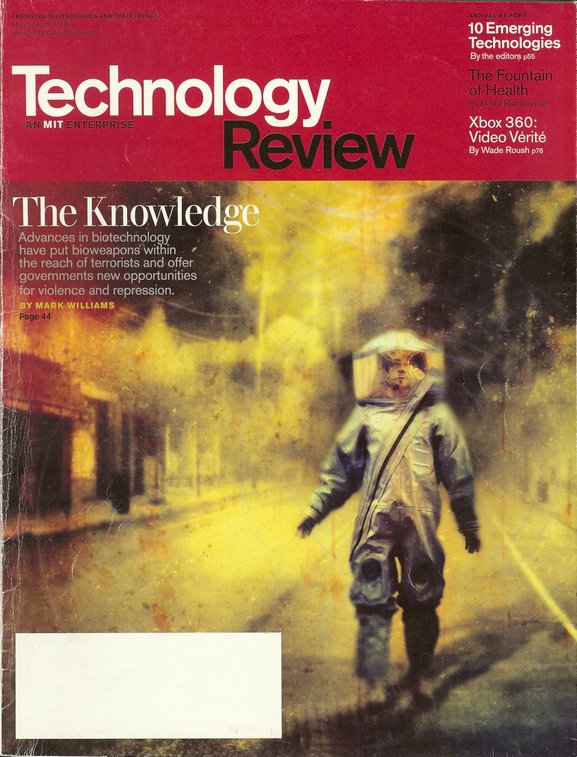
The Frontiers of Bioweaponeering
“A pathogen is only a vehicle,” Popov explained to me. “Those vehicles are available—-a huge number which can be adapted for different jobs. To cause temporary or permanent amnesia and schizophrenia, for instance—-yes, it’s possible with pathogens. To trigger the release of serotonin and dopamine—absolutely possible. If you talk about the pacification of a subject population—-yes, it’s possible. Actually, the beta-endorphin program that I worked on was considered to be a pacification agent.”
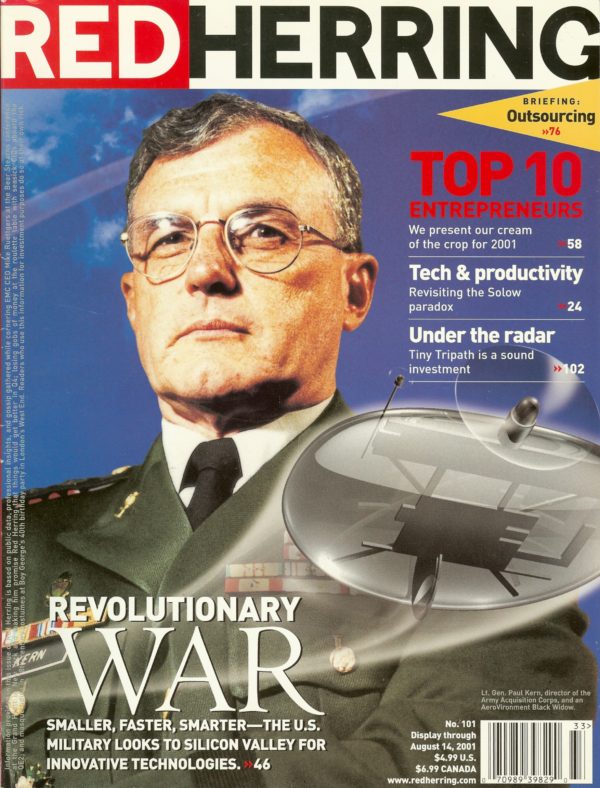
Revolutionary War
Here I predicted a quarter-century ago how 21st century wars were obviously going to be. Labs were already prototyping systems for soldiers to control drone swarms from screens and helmet visors. It was also clear that as precision-guided munitions became widespread, massed forces—-and big platform weapon systems such as carriers and tanks—- were increasingly going to become big fat targets. And yet the U.S. military-industrial complex preferred those big systems’ prestige and profitability to winning wars.
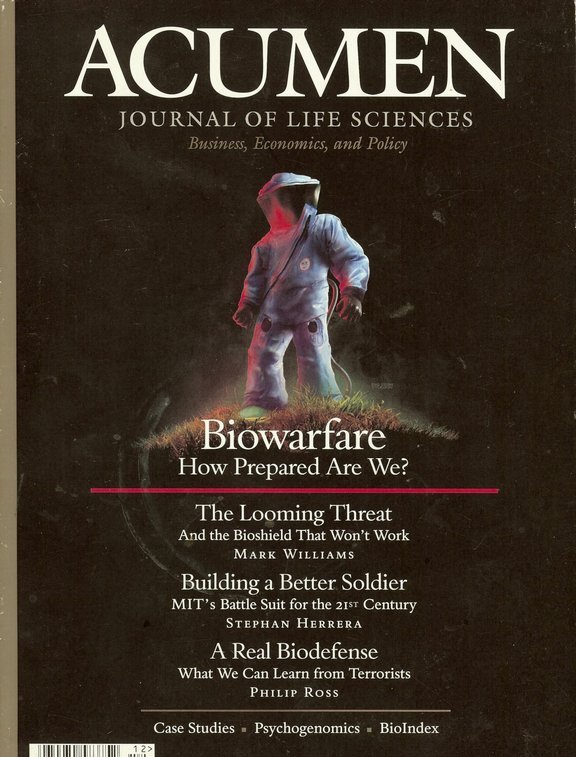
The Looming Threat
“One proposal was for a plague-Ebola combination,” said Serguei Popov, a former project head in the Soviet bioweapons program. Aerosolized in an airport, such an agent’s Ebola component would lie dormant till infected travelers had scattered worldwide and developed plague symptoms, then be triggered by the tetracycline given to treat those. “I know there was a synthesis of plague and Venezuelan equine encephalitis because the guy who did that presented the data to me.”

Kim’s H-Bomb?
When Pyongyang claimed its first H-bomb test in 2016, many scoffed at the small blast. But no nation-state that’s seriously tried has ever failed to build a basic fission bomb. The real leap is to thermonuclear and boosted fission weapons: far harder, but the only path to warheads physically small enough to place atop an ICBM. In that context, a small yield may even be evidence of engineering precision—the North Koreans wasting as little tritium as possible.
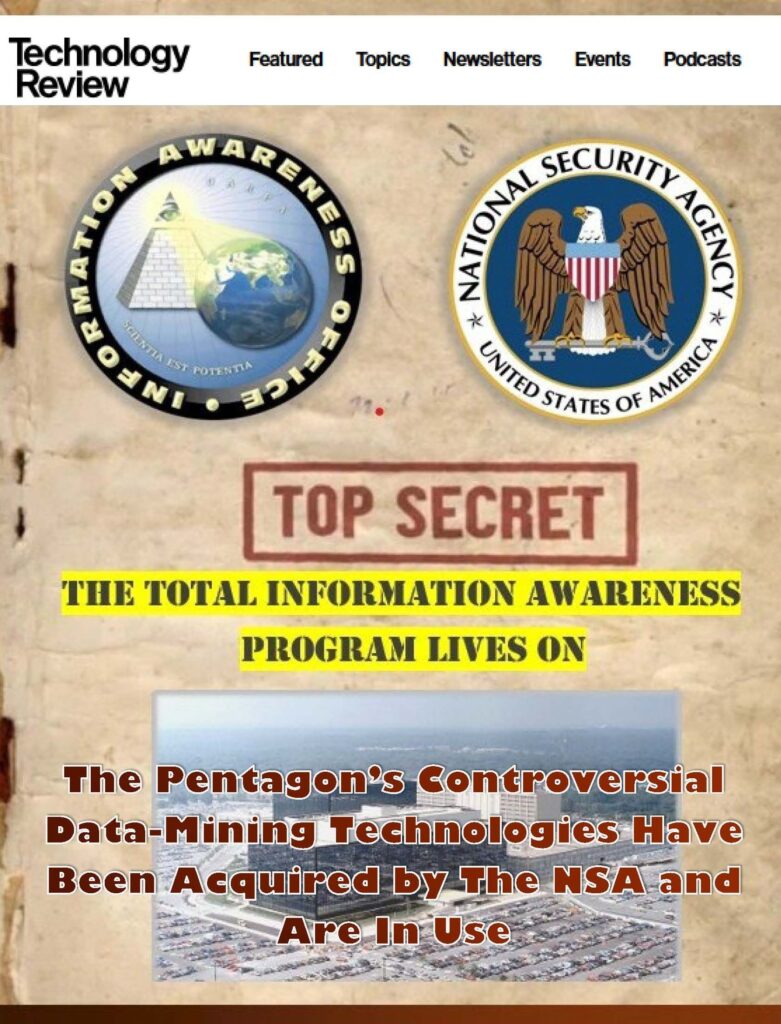
TIA Lives On
In this 2006 piece, I reported what Edward Snowden would prove in 2013: NSA had to be mirroring telecom carriers’ fiber-optic switches and harvesting everyone’s data before they could surveil any specific individual targets. Also, when Congress killed the Total Information Awareness program, it killed only the privacy-protecting data-anonymizing technology, Genisys, moving the rest to NSA, then to private cutouts such as Palantir, for further deniability.
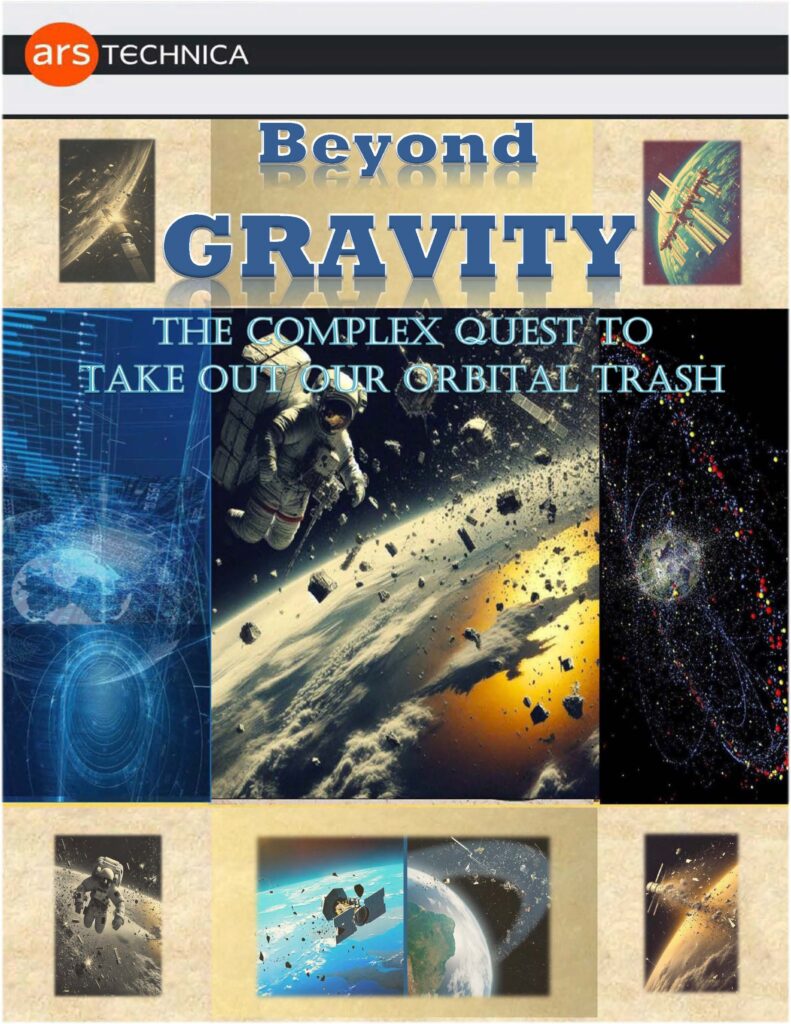
Beyond Gravity
Half a million pieces of debris circle Earth at up to 18,000 mph — fast enough that sub-millimeter fragments have crippled satellites. The cheapest fix, a “laser broom,” could clear debris for about $1,000 a piece. It’s also politically unacceptable: a laser precise enough to nudge satellites looks like a weapon to other nations. So space agencies are pondering costlier options: tugs, nets, tethers, and even balloons of sticky aerogel.
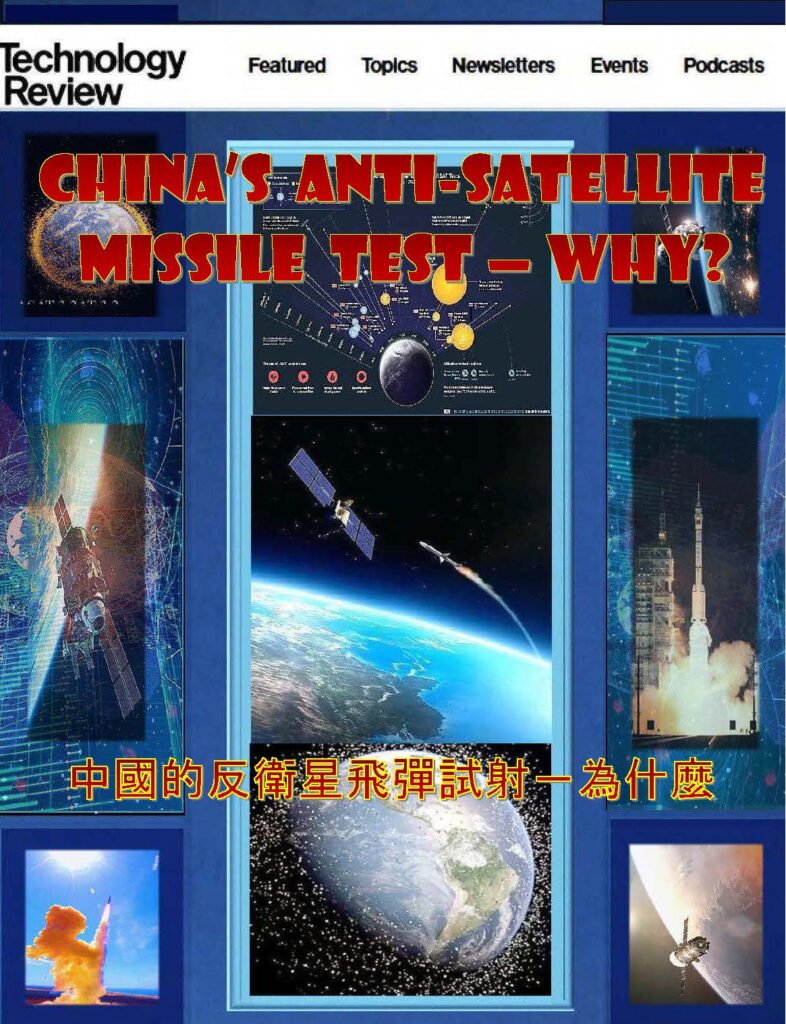
China’s ASAT Missile Test — Why?
In 2007, China blew up one of its own satellites with a missile — and created the largest debris field ever recorded in orbit: over 35,000 fragments, now brushing past two-thirds of everything else humanity has in space. Just why China did it remains unclear. Yet the real danger isn’t the mystery — it’s the 1,000-plus weekly near-misses which one day could conceivably spark a war that nobody intended.

Weather Engineering In China
China’s plan to keep it from raining on the Beijing Olympics: 37,000 part-time weather engineers, mostly peasant farmers, armed with 7,113 anti-aircraft guns and 4,991 rocket launchers, firing silver iodide into clouds before they reach the stadium. It’s the world’s largest weather-modification program — the very same technology the Soviets once used to keep Chernobyl’s radioactive rain off Moscow.

Terraforming Earth — New Shades of Green
In 1968, Stewart Brand launched the Whole Earth Catalog and helped invent environmentalism. Now he says the movement got nearly everything wrong: cities are good, the global DDT ban may have cost 20 million children their lives, for nothing, and nuclear power, not solar or wind, is the realistic path off fossil fuels. Counting on nature to save us, he warns, is Russian roulette with all the chambers loaded but one.
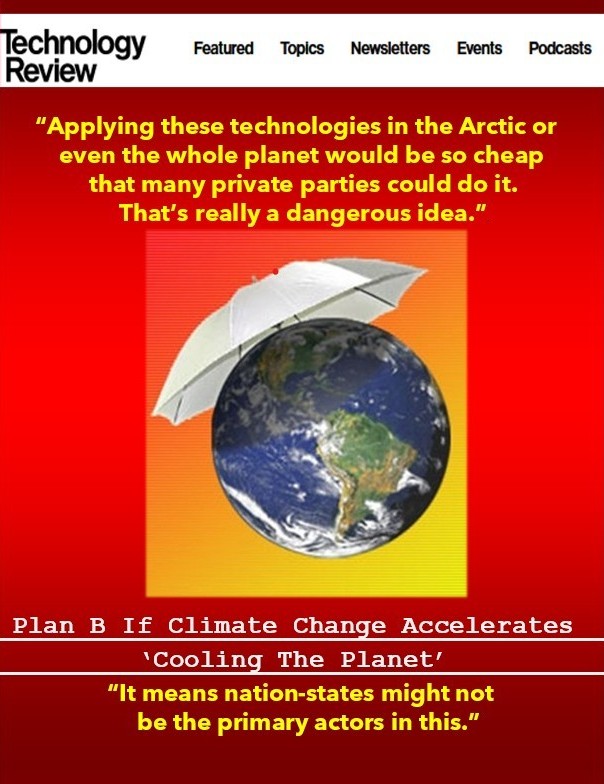
Plan B: Cooling The Planet
Is there a Plan B — an emergency option if climate change accelerates and catastrophe looms within a decade or two? Proposals include trillion-lens sunshades and orbital mirror clouds, which physicist Gregory Benford dismisses as “fun ideas for the year 2,100. But we don’t live there.” His own fix is more straightforward: seeding the stratosphere with dust, for a few billion dollars a year, no government required.
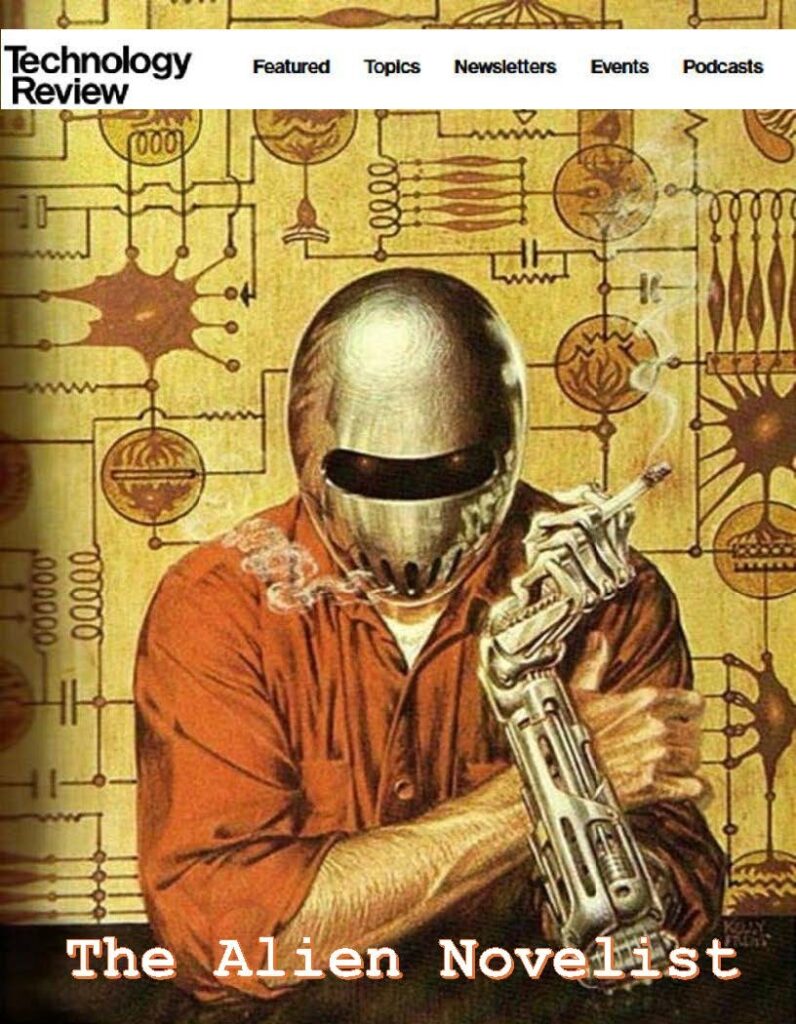
Algis Budrys
–1931-2008
At five, Algis Budrys watched Hitler’s motorcade pass through his hometown, and the crowd’s frenzied reaction convinced him he’d been born among a species of werewolves. He spent his life writing science fiction that took that darkness seriously as literature — Kingsley Amis called him the best SF writer since Wells. Interviewed while dying of cancer, asked who wrote it best, he answered without hesitation: “Me.”
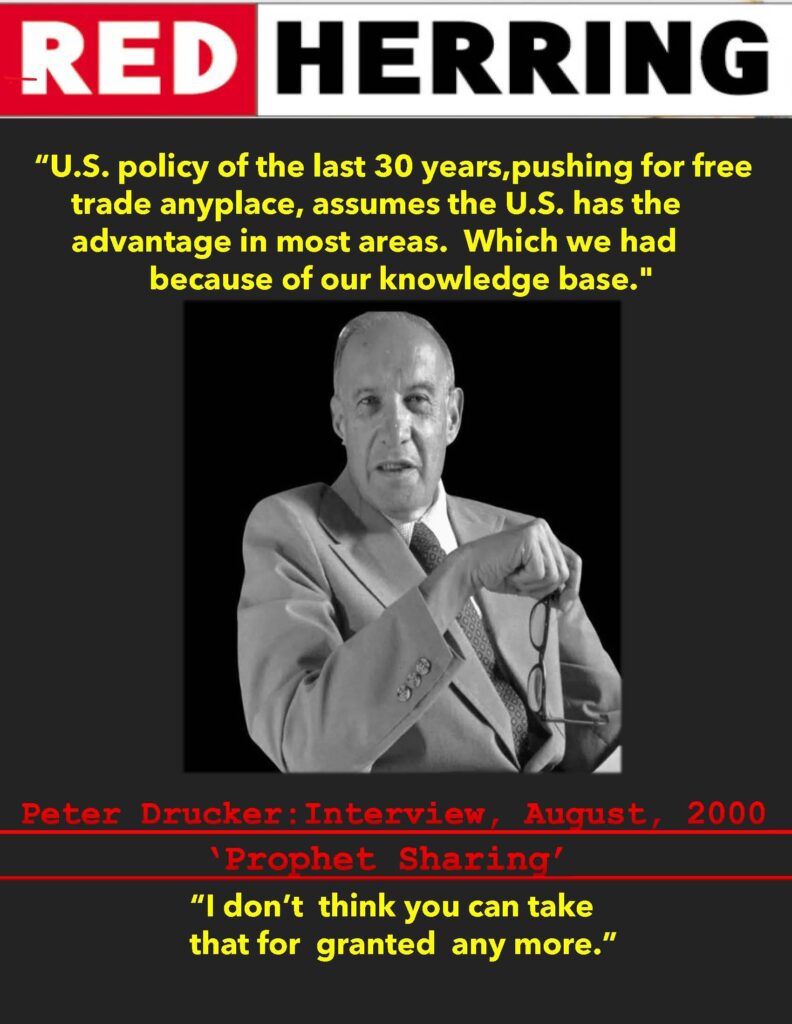
Peter Drucker Interview
Franz Kafka’s real legacy, says a 90-year-old Peter Drucker, isn’t literature — it’s the safety helmet for industrial workers he invented as an insurance man. Drucker, still consulting five days a week, argues stock options don’t retain knowledge workers; they bribe them to leave the moment the options vest. His bigger claim: as manufacturing jobs disappear, protectionism will rise to replace them, the way it did in farming.
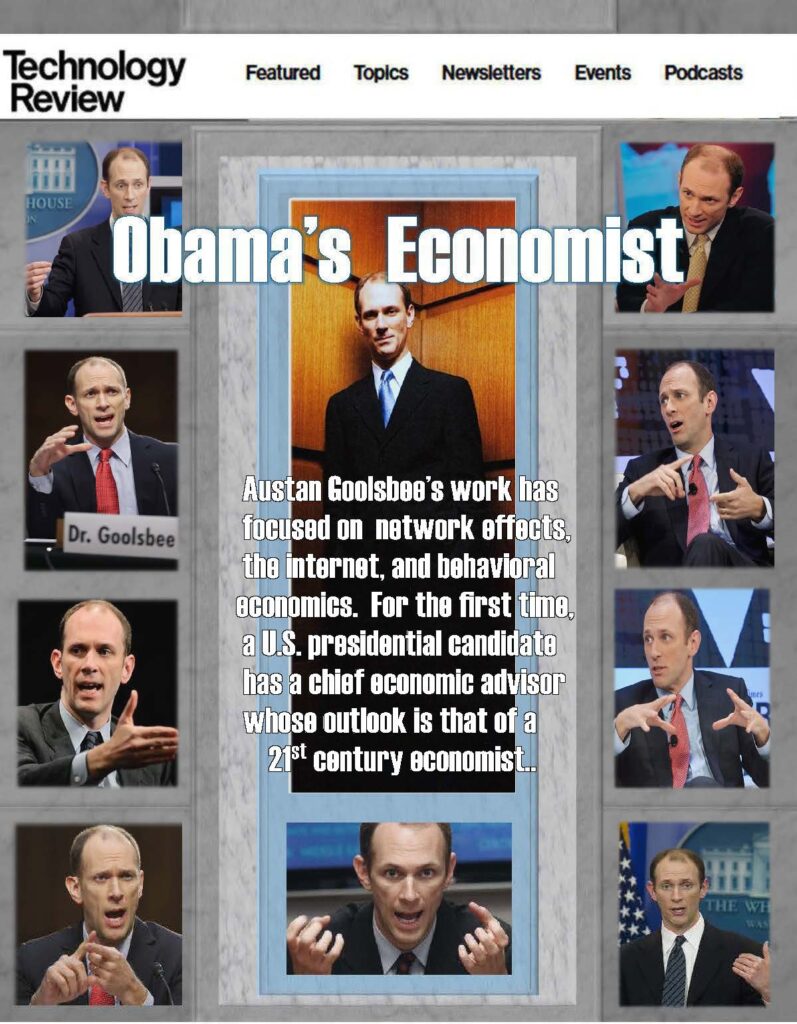
Austan Goolsbee –Obama’s Economist
When Barack Obama’s campaign finally arranged a face-to-face meeting in 2004, he opened the door, saw his chief economic advisor, and said, “You can’t be Professor Goolsbee.” He’d expected a tweed-jacketed elder statesman, not a 39-year-old MIT-trained economist. Goolsbee argues that globalization isn’t what threatens ordinary Americans’ incomes — a widening skills gap is, and it could soon harden into a permanent class barrier.

The Rothschilds & World Economics
Think whoever tops this year’s Forbes rich list is the wealthiest person who ever lived? Wrong: measured as a share of world GDP, no one’s approached Nathan Rothschild or his brother James, who dominated mid-1800s European finance from London and Paris. Their dynasty was undone in decades, not by bad bets, but the modern nation-state’s rise. By 1915, when the richest Rothschild in the U.K died, he would leave a mere 2.5 million pounds.

Facial Expression Recognition Tech
In the late 1960s, a suicidal patient smiled and spoke cheerfully on camera, asking for a weekend pass home, where she killed herself. Paul Ekman combed the film frame by frame for a week and found the truth: two microexpressions of despair, each a 25th of a second long. Software can now read such flickers as fast as Ekman’s rare human wizards — but even a perfect reading can mislead: the fear of being disbelieved looks exactly like guilt.
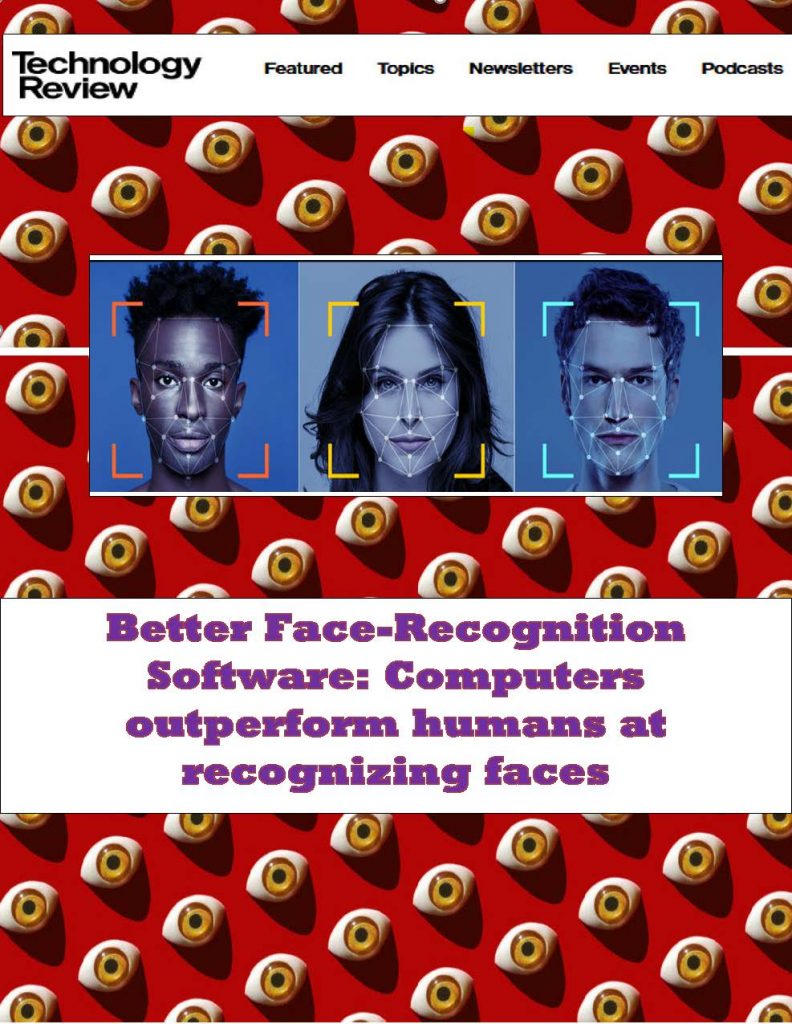
Facial Recognition Tech Beats Humans
Facial recognition software had just begun beating humans at matching strangers’ faces by using 3-D scans when I wrote this in 2007. One researcher back then pointed out what the result would be: citywide camera nets, like those feeding today’s ICE face-matching app and China’s Skynet. Twenty years later, the software remains least accurate with black faces — the population U.S. policing already surveils most.
The Surveillance Super-Corporations
In 1998, I realized commercial, more than government, surveillance was the immediate threat: firms like Acxiom, ChoicePoint, and LexisNexis already harvested more data on us than Bentham’s Panopticon ever dreamed of. In 2006, I learned how right I’d been, when scientists in DARPA’s Total Information Awareness program told me they’d gone looking for data on Americans and found those firms had it all already.
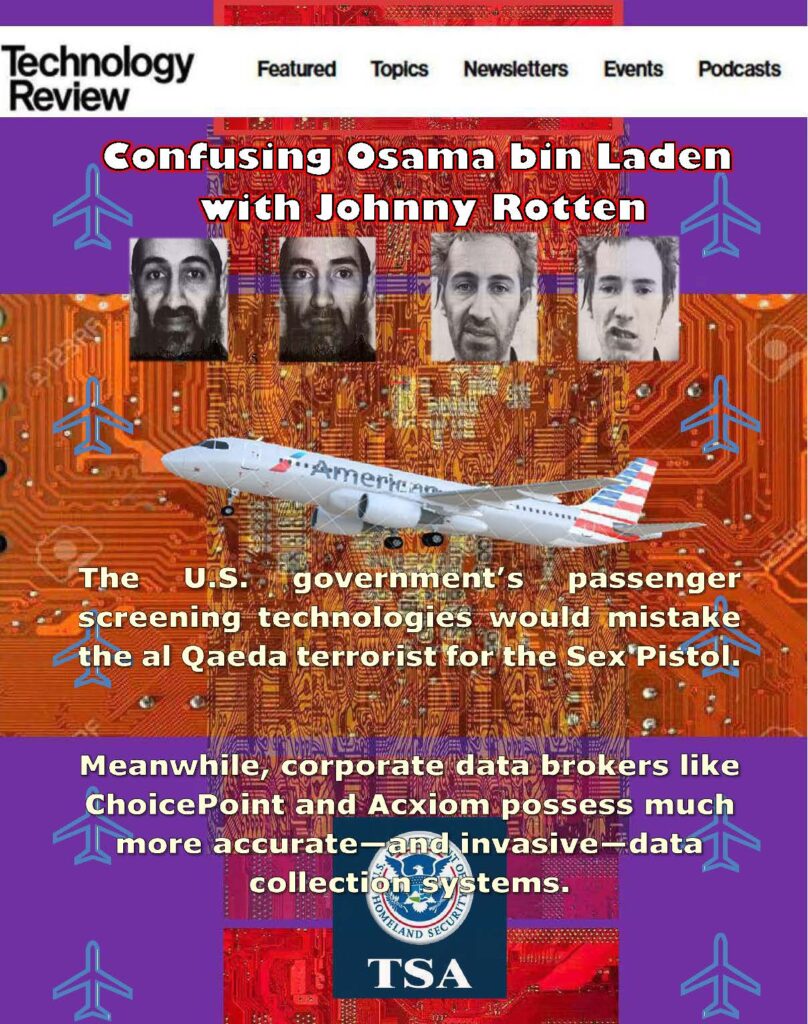
Confusing Bin Laden & Johnny Rotten
At the height of the ‘War on Terror’ in 2007, the Federal government’s terrorist watch-list algorithm, built in 1890 to index census surnames, reduced every name to a letter and three digits and could’t tell Osama bin Laden from Johnny Rotten. ChoicePoint, a private data broker, could do better — not that this was any comfort when it was the same company Florida used to wrongly purge 57,700 black and Hispanic voters as felons.
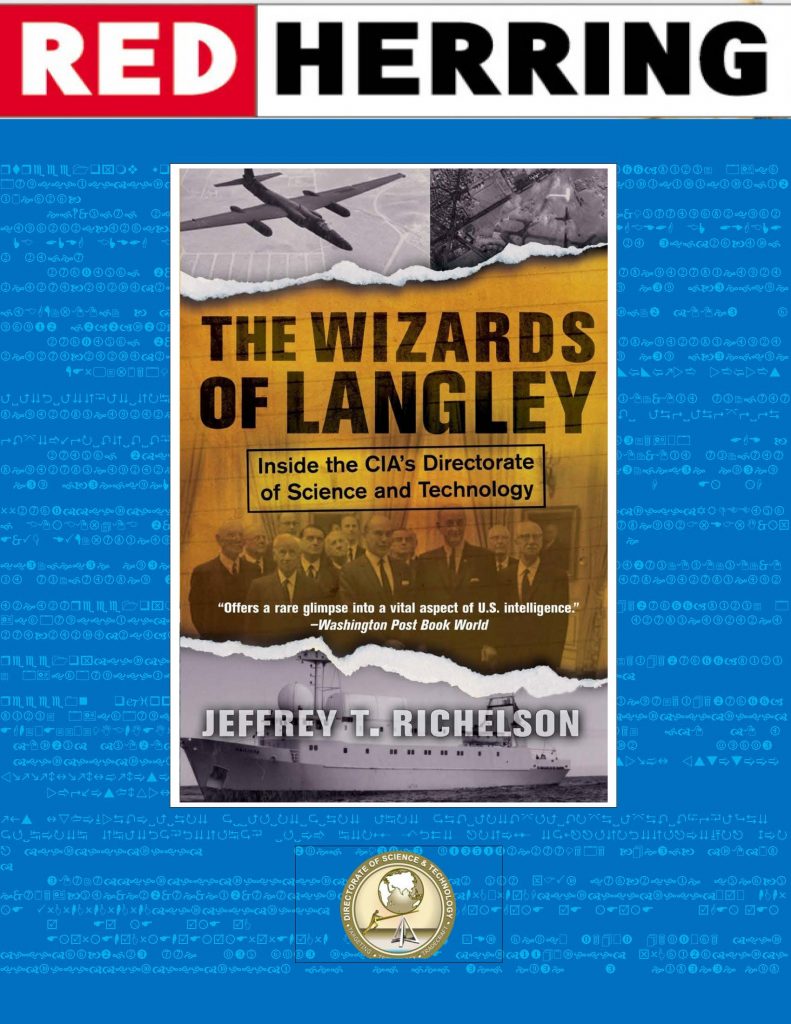
Taking the Human Spies Out of Spying
The CIA’s boldest human operation: a fake Canadian film company, ostensibly scouting Iranian locations for a science-fiction movie, that smuggled out six American diplomats after the Shah’s fall. Other than that, this book argues, Langley has tended to be highly technocentric — spy planes flying 90,000 feet up at 2,100 mph, and satellites reading Soviet harvests from orbit. In the 1970s, one director’s distaste for HUMINT’s messiness deepened that bias, leaving the Agency without a single Farsi or Pushtu speaker in 2001.
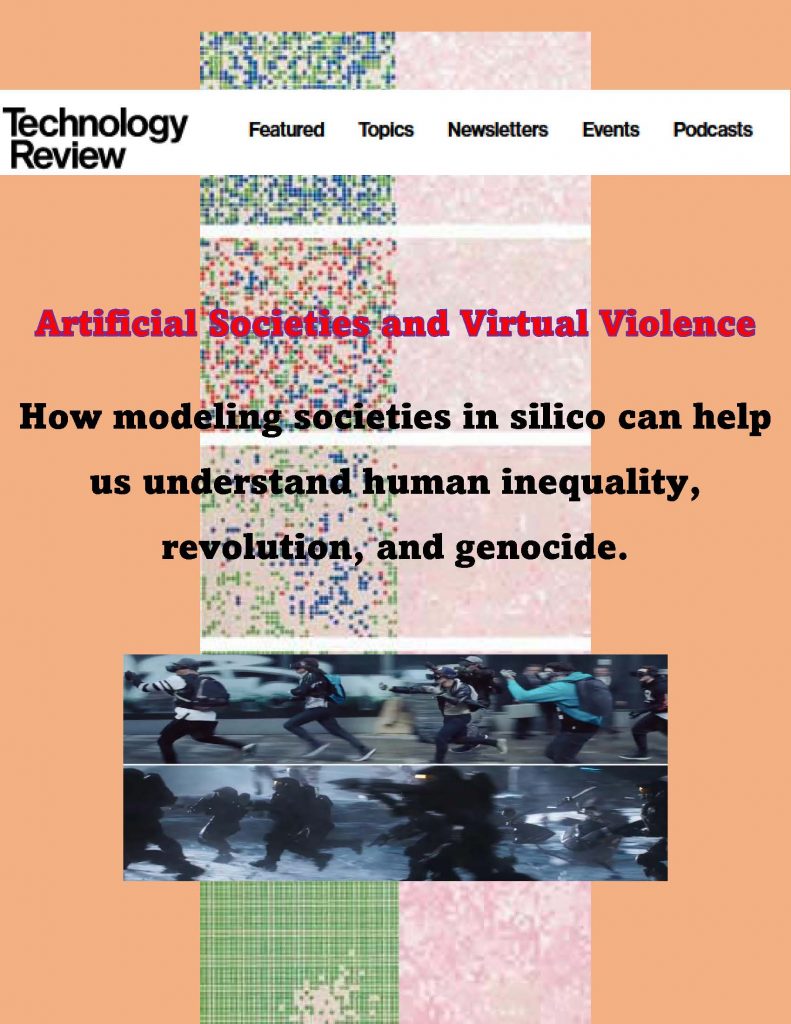
Artificial Societies & Virtual Violence
Removing the police from Joshua Epstein’s computer model of ethnic conflict, and lowering one group’s perceived legitimacy by just 20 percent, is enough to trigger ethnic cleansing every time. Add police back, and the genocide can still happen—just slower. Epstein’s simple rule-based agents, initially built to simulate a hunter-gatherer economy, can reproduce real historical patterns with precision: run against the actual Anasazi landscape, his artificial settlers colonized the site where the real civilization had once stood.
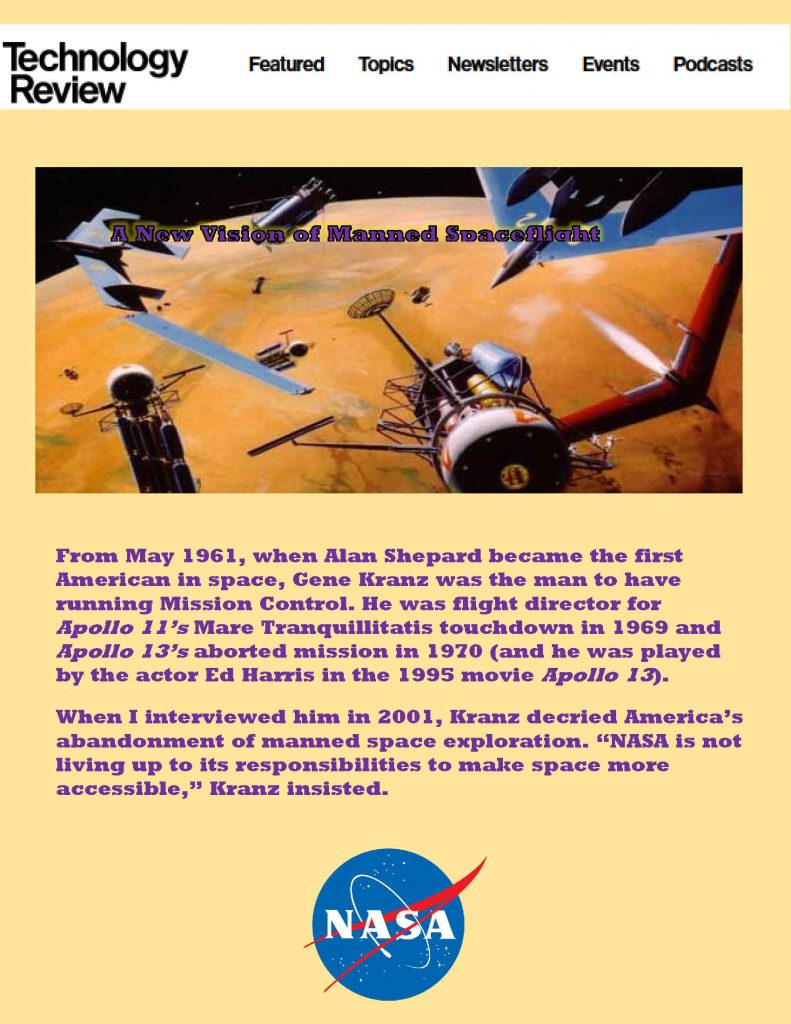
A New Vision of Manned Spaceflight
Project Orion was Cold War America’s most Faustian technological scheme: a spaceship driven by detonating nuclear bombs behind it, meant to carry forty astronauts around the solar system by 1970. Arthur C. Clarke, asked what he’d never expected, replied: “That we would go to the moon, then stop.” But one big reason for that is the inherently limiting physics of chemical rockets, which burn 16 tons of fuel per orbited ton and 1,000 for a Lunar round trip — a dead end, which Orion at least tried to vault over.
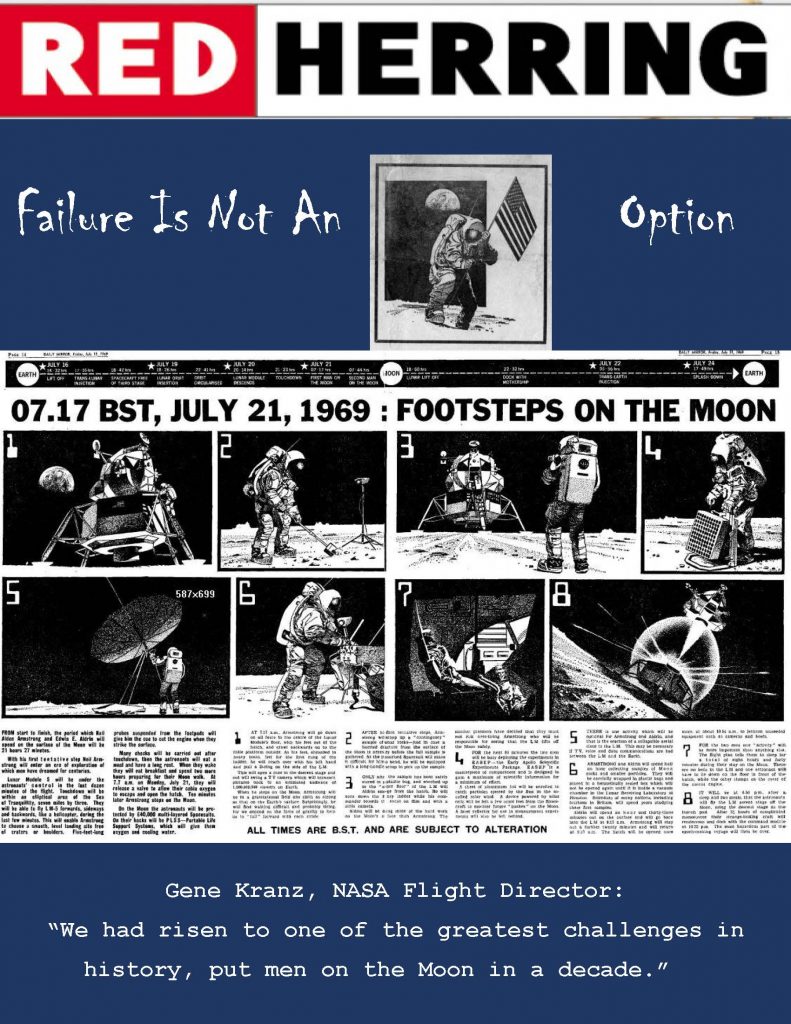
‘Failure Is Not An Option’ — Gene Kranz
At the Mercury program’s inception, NASA tracked orbiting spacecraft with a toy model on wires and beads sliding on wooden rods like an abacus—technology closer to a 1950s sci-fi set than to Apollo, which arrived just a decade later. Flight director Gene Kranz, who ran Mission Control from Shepard’s flight through Apollo 13, insists the era’s real edge was cultural: a nation once willing to “take risks” and “act on strong beliefs,” unlike today’s spectators.
NASA’s Bold Plan For Private Spaceflight
SpaceX promises to cut launch costs tenfold, to $1,000 per kilogram by 2010—yet its Falcon 1 rocket keeps failing, most recently catching fire and dying 30 seconds after liftoff. The optimism behind NASA’s 2006 push toward commercial spaceflight rests on a shaky assumption: that cheaper fuel and lighter materials will drive down costs, when the real expense is labor, which eats 60 percent or more of any rocket program’s budget regardless of launch frequency.
Technology And the Future of Warfare
Two British subs penned in the whole Argentinian navy during the Falklands War, while a single Exocet missile proved a “slow-moving capital ship” could burn to the waterline. John Arquilla, a Pentagon advisor and advocate of the doctrine of military “transformation,” argues the lesson still hasn’t landed: in 2006, the US Navy keeps building supercarriers bigger than the Nimitz class and insists on fighting against enemies armed with smart, cheap, long-range weapons.
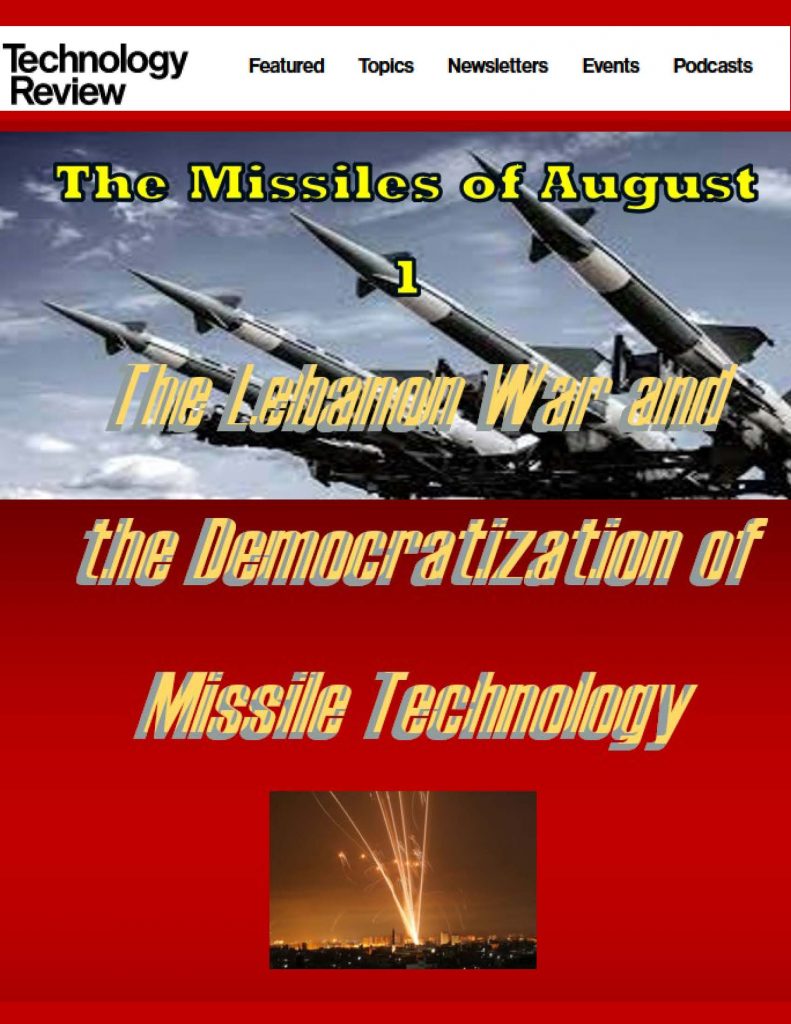
One: The Democratization of Missile Technology
In 2006, a militia of roughly 3,000 fighters stalled the IDF, supposedly one of the world’s best armies, for weeks, damaging over 20 top-tier Israeli tanks and holding in reserve 200 long-range missiles capable of reaching Tel Aviv. American and Israeli anti-missile systems, meanwhile, proved nearly useless: interceptors cost millions apiece against rockets that cost little, and one prototype was, by a U.S. analyst’s own account, “a sitting duck” the size of six buses.
Two: The Democratization of Cruise Missiles
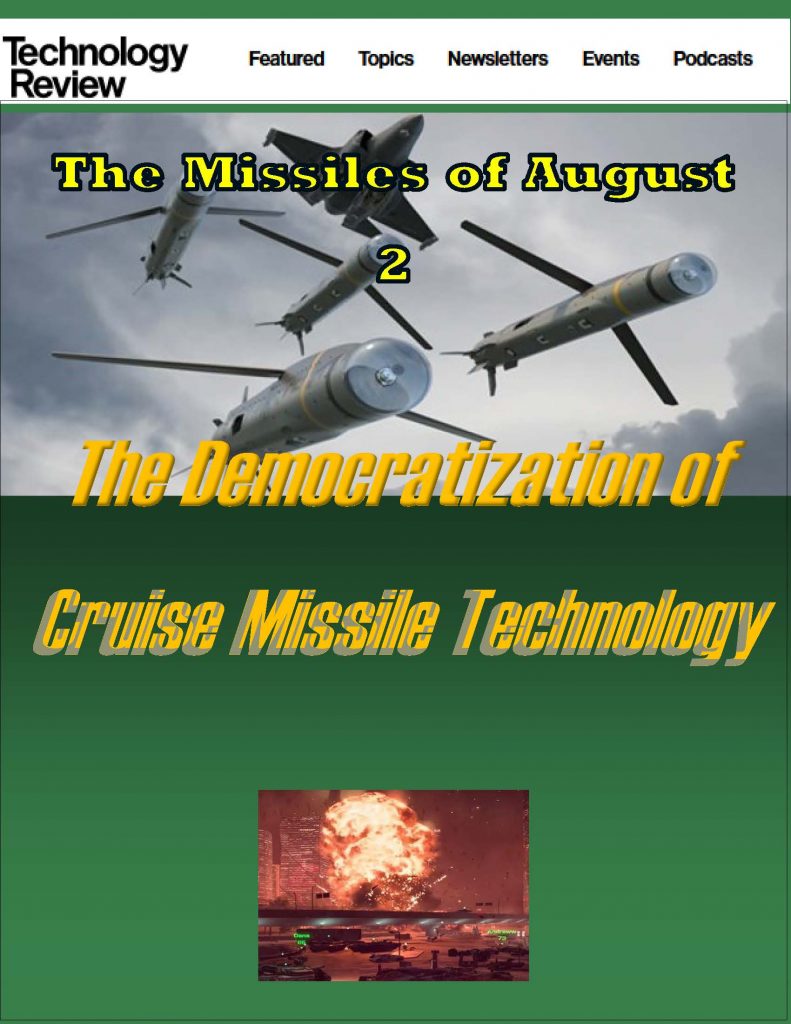
As many as 130 cruise-missile variants now exist across 75 countries, eroding a technology that was once America’s exclusive military edge. Some spread accidentally: in 1998, six of the 75 Tomahawks the US fired at Osama bin Laden’s camps misfired into Pakistan, where engineers reverse-engineered them into the Babur missile. Chinese and Russian designs have proliferated by more deliberate routes, turning up as far afield as Hezbollah’s arsenal and Iran’s navy.
U.S. Big Weapons Systems — Big Fat Targets In Real war?
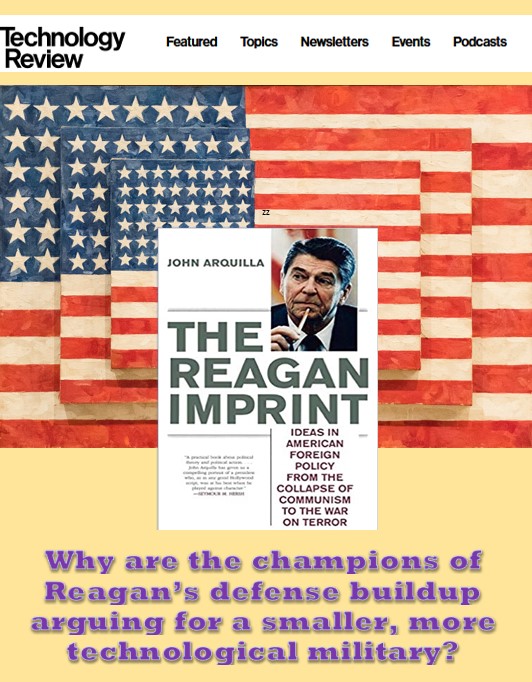
Writing in 2006, John Arquilla argues the Pentagon still hoards giant carriers and heavy-tank divisions out of sheer inertia—St. Augustine’s prayer applied to warfare: “help me to be pure, but not yet.” His case for smaller, networked forces has an unlikely pedigree: Reagan’s own defense strategist Andrew Marshall first sketched the idea, aiming not for bigger armies but for smart weapons agile enough to counter China without matching it ship for ship.
Rethinking the Unthinkable
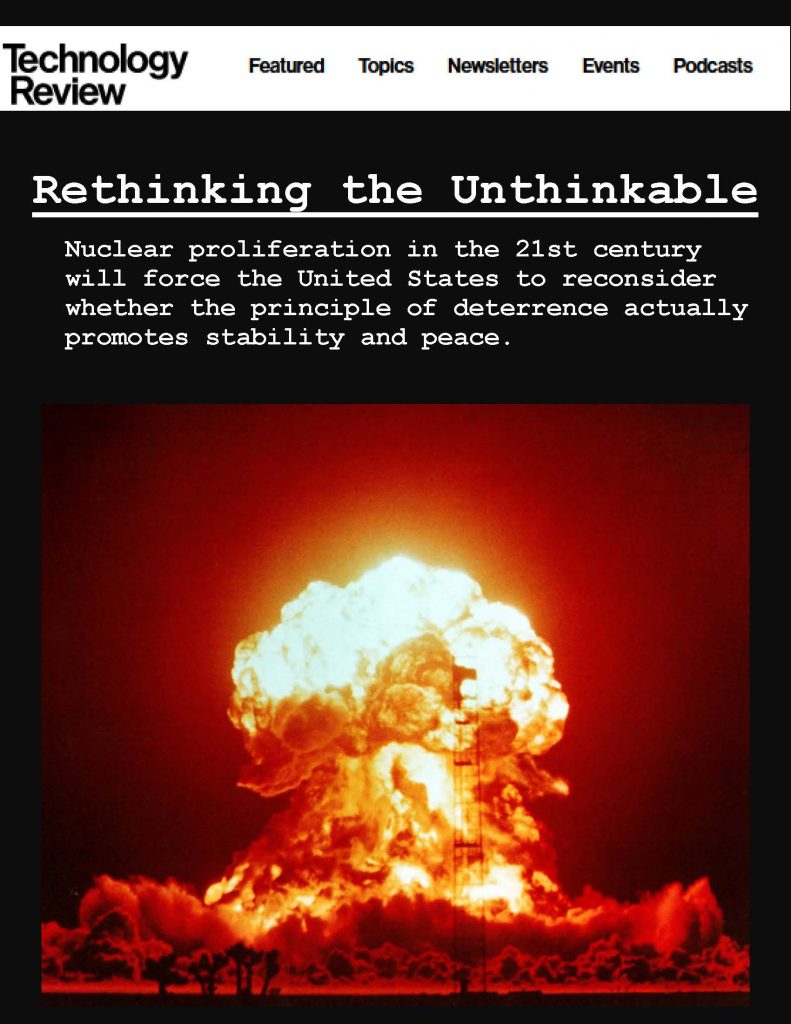
In 2011, just outside Wilmington, North Carolina, a nondescript building was set to become the world’s first commercial plant for LIS, or laser isotope separation: a uranium-enrichment technology so efficient and hard to detect that experts call it the likeliest route for any actor, state or not, to covertly build a bomb. It needs only a midsize warehouse and less power than a dozen suburban homes. Indeed, from 2000 to 2003, Iran ran a LIS pilot program at its Lashkar Ab’ad facility, 40 km outside Tehran, that went undetected till dissidents revealed it to the IAEA.
On Display: The Unthinkable
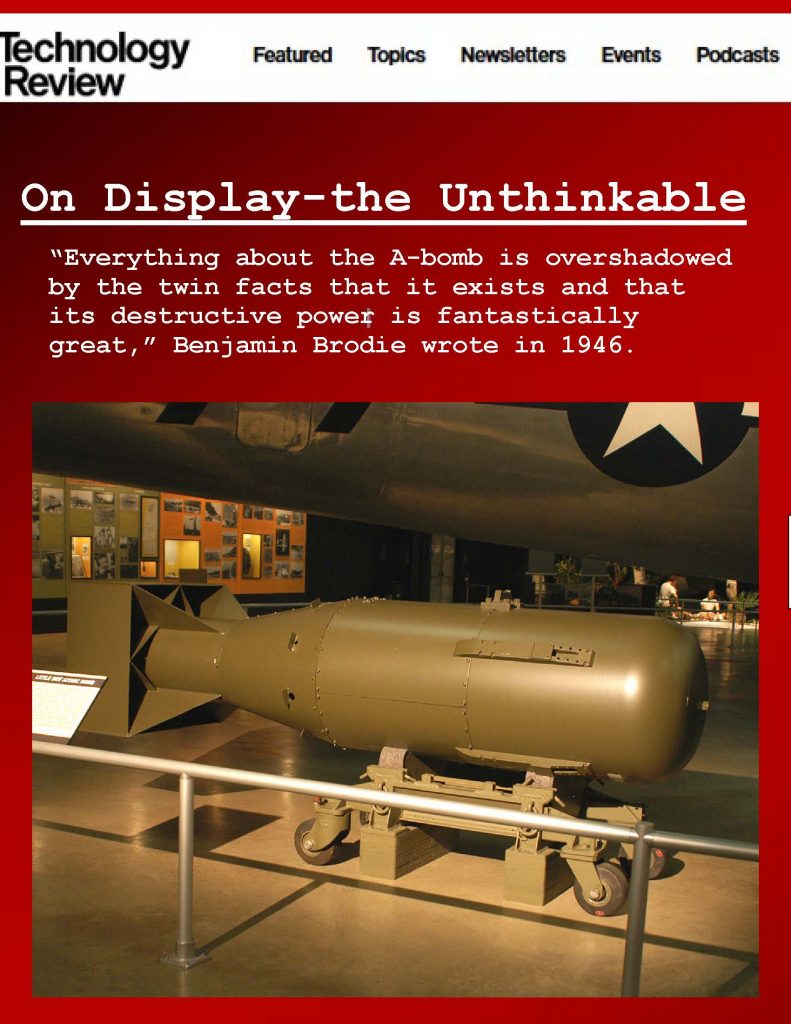
At the National Atomic Museum in Albuquerque, a placard next to a 16th-century tapestry of war elephants compares them to nuclear bombs. Both, we’re supposed to believe, were weapons that “society always placed limits on.” The comparison is dubious and dishonest: dubious because elephants saw centuries of unrestrained battlefield use before and after Rome disarmed Carthage of them; dishonest because its purpose is to pretend that nuclear weapons’ vast destructive powers are ‘thinkable’ in any conventional frame at all.

Next-Gen Nuclear Power Design
In 2006 I got asked to profile UC Berkeley’s Nuclear Engineering Department and a genuinely new reactor design, the Economic Simplified Boiling Water Reactor. It had no pumps, no emergency generators, almost no moving parts beyond its control rods — gravity alone drove the cooling. Engineer Per Peterson’s team spent 15 years perfecting the design and it was licensed — and then never built in the US. It took Canada, breaking ground in 2022, to actually build its smaller descendant, the BWRX-300, which will start supplying power in 2030.

Choosing Our Children’s Genes
Imagine an auxiliary chromosome—a human artificial chromosome, or HAC—that would serve as inert scaffolding, carrying none of your own genes, but enabling a doctor to plug genetic modules for HIV resistance or more efficient muscles into your genome. It would be upgradable anytime, too, because your natural genome would stay untouched–a convenient thing, if, as Gregory Stock predicts, a father may one day give his daughter “chromosome 47, version 2.0,” only for her to find it “downright primitive” by the time she gets round to having children of her own.
Technology And Human Evolution
Lacking claws or fangs to butcher prey, early humans shaped stones into blades instead — and such tool use, over a million years, tripled brain size and spread the species across three continents. Reviewing this, sixteen academic essayists call for democratic, evidence-based control over where that drive goes next. Yet what that evidence-based control looks like is questionable when one writer here seriously insists, for example, that a tribe’s belief that soil “menstruates” deserves equal standing with scientific fact.
Neuroengineering We Can Build You
Just fetching a beer from the fridge requires your brain to pick the best of 1,015 possible muscle-contraction combinations roughly a thousand times a second—which is so much computational work that if it were done digitally, it would require a billion-gigahertz processor. Yet the whole brain runs on barely a billion neurons. Neuroscientist Rodolfo Llinás’s proposes a solution to this paradox: synchronized 40-Hz oscillations, not raw processing power, may be what binds scattered neurons into what we experience as consciousness.
The New Science of Archeogenetics
Archaeologist Colin Renfrew’s “sapient paradox” asks why modern humans took 190,000 years to invent farming and cities. One big discovery is that not only hasn’t human evolution stopped but genetic analysis shows it accelerating since agriculture began, reshaping genes for digestion, disease resistance, and impulse control. Moreover, in the last 10,000 years our brains have shrunk 200 cubic centimeters—another 200 and we’d be back at Homo erectus’s level.
Darwin At Large: R. Dawkins & Others
At 40, diagnosed with cancer, Stephen Jay Gould reasons his way to hope: half of any death distribution is compressed into the early months, so a young, well-treated patient sits toward the survivable tail. Fourteen years later, he’s still alive. Richard Dawkins, conversely, sees DNA as a single being pouring itself into temporary receptacles — flowers,elephants, ourselves – as robot vehicles to ride around in while it pursues its fundamental self-replication program.

Enhancement – Our Posthuman Future?
Critics call human genetic enhancement playing God; Francis Fukuyama warns that it could fracture humanity into genetic haves and have-nots. SF writer Bruce Sterling’s rejoinder is that any superbaby will be only a beta release, “a hack job” obsolete by adulthood, anyway. Gregory Stock proposes technology to sidestep that problem: an add-on human artificial chromosome, or HAC, upgradable at any time for version 2.0., which leaves that baby’s natural genes alone.
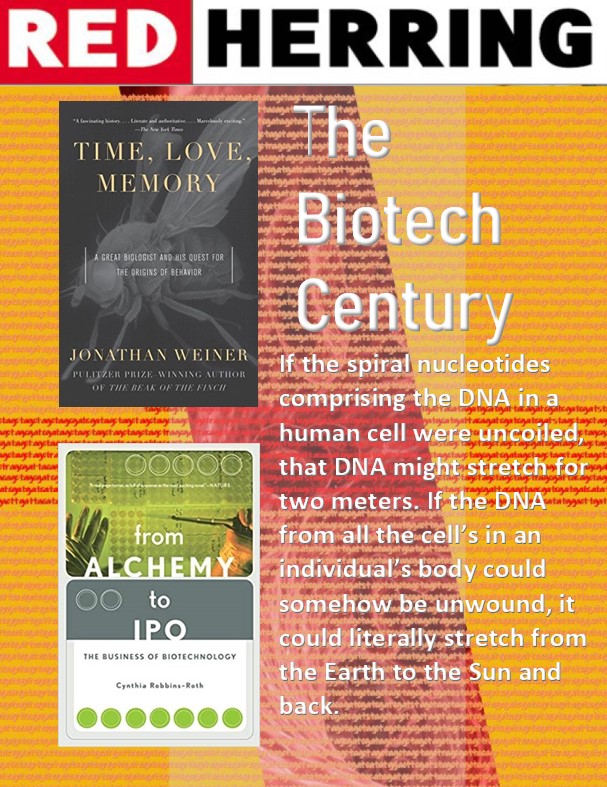
The Biotech Century
In the 1950s, Seymour Benzer breeds mutant fruit flies whose internal clocks, mating rituals, and memory falter or disappear depending on which single gene he’s disabled—early proof that genes, not just environment, write behavior. A half-century, biotech is trying to monetize that insight: a new drug now costs $500 million and takes 15 years to get to market, and yet 140 are moving through the pipeline anyway.

Frankenfoods Redux
By 2002, nearly a quarter of American corn was genetically modified. And yet proponents’ insect- and herbicide-resistant crops had made Monsanto only a few hundred million a year, nowhere near the world-conquering business its critics had feared—even as GM crops proved not to be unstoppable “superweeds,” but engineered dependents that couldn’t survive without the Monsanto products they were bred to require.

Big Pharma’s Market
Jeremy Rifkin’s The Biotech Century compares the race to patent the human genome to Europe’s land enclosures. E.O. Wilson‘s Consilience argues that our religious impulses are genetically derived: primate dominance structures which humans, never satisfied with “raw apish feeling,” extended into abstraction, inventing deities — “hyperdominant if invisible members of the human group.”
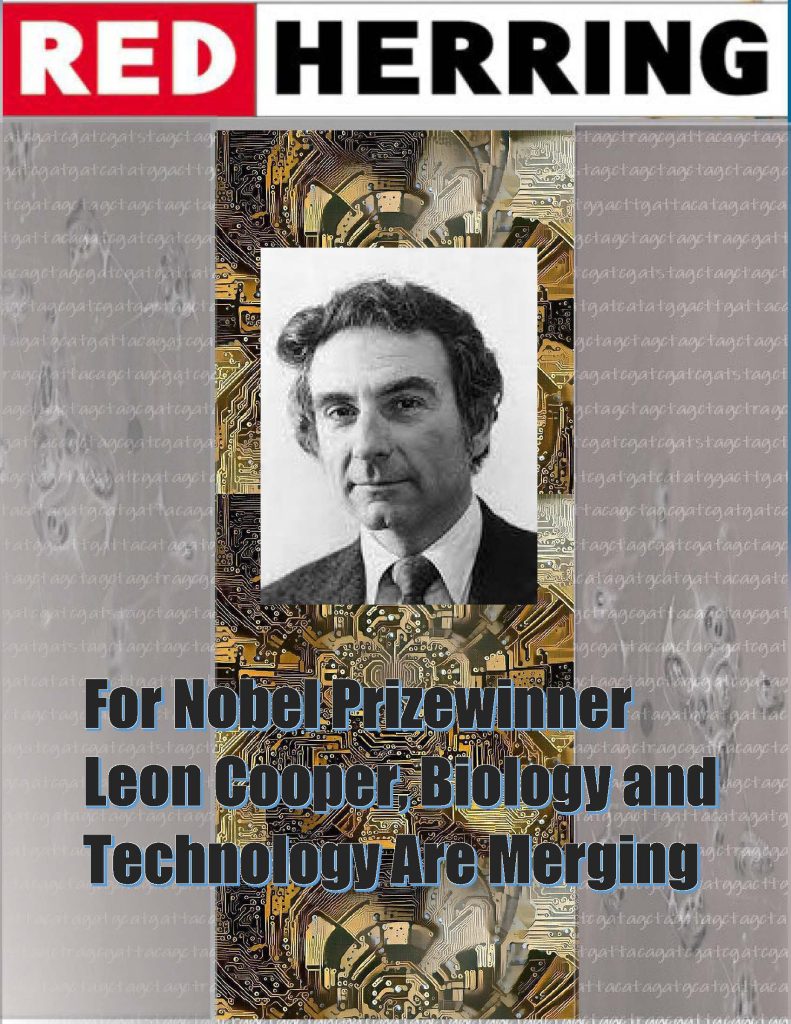
Nobel winner Sees Biology & Technology Merging
A Swedish reporter called Leon Cooper’s house twice in one night in 1972; the second call confirmed he’d won the Nobel Prize in physics, for a superconductivity theory dreamed up in 1957. Bored with the subject by the time he collected the prize, Cooper had already moved on to building neural networks modeled on the brain’s own pattern-recognition, convinced that only human self-centeredness makes the universe’s complexity seem scaled to our intellects

Sex! Its Past, Its Present, And Its Promising Future
Inject additional testosterone into a low-ranking male monkey and he doesn’t turn alpha but just gets meaner to monkeys below him, as the hormone raises aggression only where dominance struggles already exist, not where status is fixed. That’s one neurobiologically rooted view of primate sexual behavior. Another, cruder one imagines cheap paternity testing ending marriage as we know it, as men pay women only for sex, and women pay men only for sperm.

Organ Transplants: The Disturbing Early Days
Britain’s first heart-transplant patient arrived at the hospital in 1968 preceded by cheering crowds and a band playing “Britannia Rules the Waves,” then died weeks later, one of hundreds whose bodies rejected the organ, because reliable immunosuppression wouldn’t exist till 1983. Behind the spectacle, a black donor in apartheid South Africa had his heart taken without consent. Transplant technology’s true history is almost unrelentingly savage.

Healthcare Economics for Silicon Valley
In 2000, as dot-coms rushed to fix healthcare’s paperwork with the internet, one real-world fact undercut the optimism: Blue Cross and Blue Shield of Massachusetts employed more staff to administer coverage for 2.5 million New Englanders than Canada employed to run single-payer care for 27 million people. The real bottleneck wasn’t technology and prices weren’t set by patients, but by HMOs and employers.
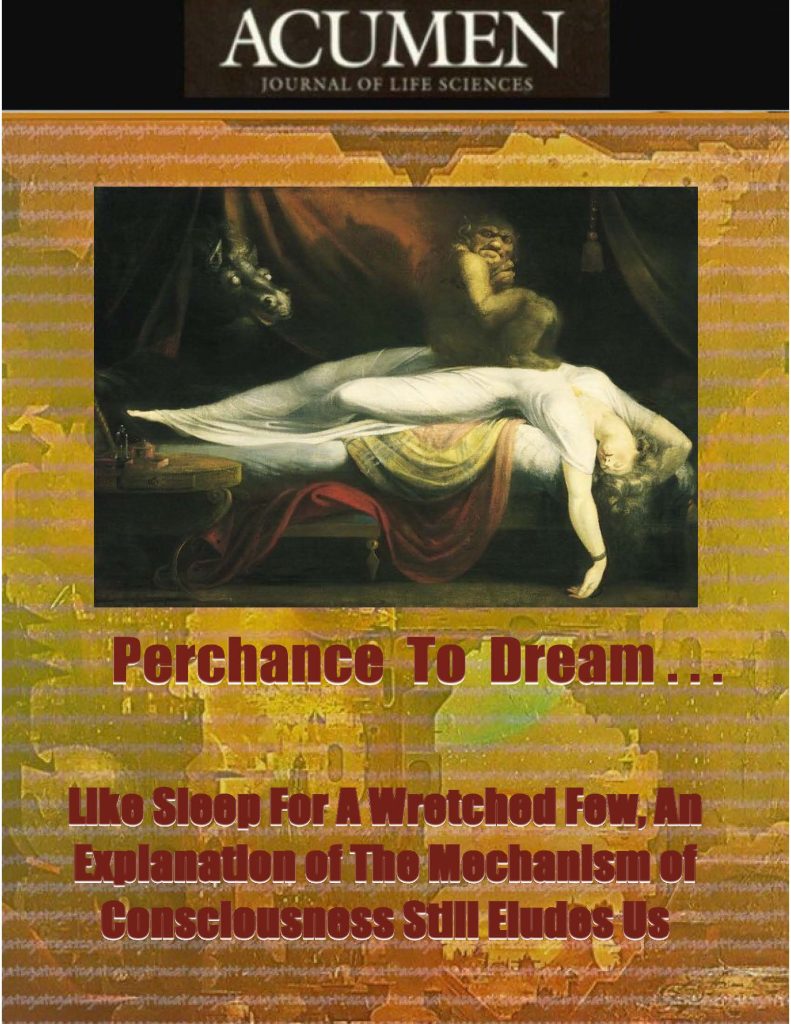
How Do Sleep & Consciousness Work?
An aristocratic Venetian family carries a genetic curse: sufferers of fatal familial insomnia (FFI) simply cease sleeping, then die within months, unable to shut off consciousness. The case reveals how little we know about consciousness, beyond the fact that the brain processes 10 trillion bits per second, and consciousness barely 50-—yet when FFI victims cannot silence even that sliver, its effect is that crucial.

A New Brain Implant Which Uses Light
Shine blue light onto a neuron engineered with the right gene, and it fires; yellow light, and it falls silent — a precision that electrical implants can’t match. Parkinson’s stems from the death of just a few thousand cells, but today’s implants stimulate everything nearby indiscriminately. Optogenetics could instead correct only the specific downstream circuits those dead cells leave broken, without touching healthy neurons.
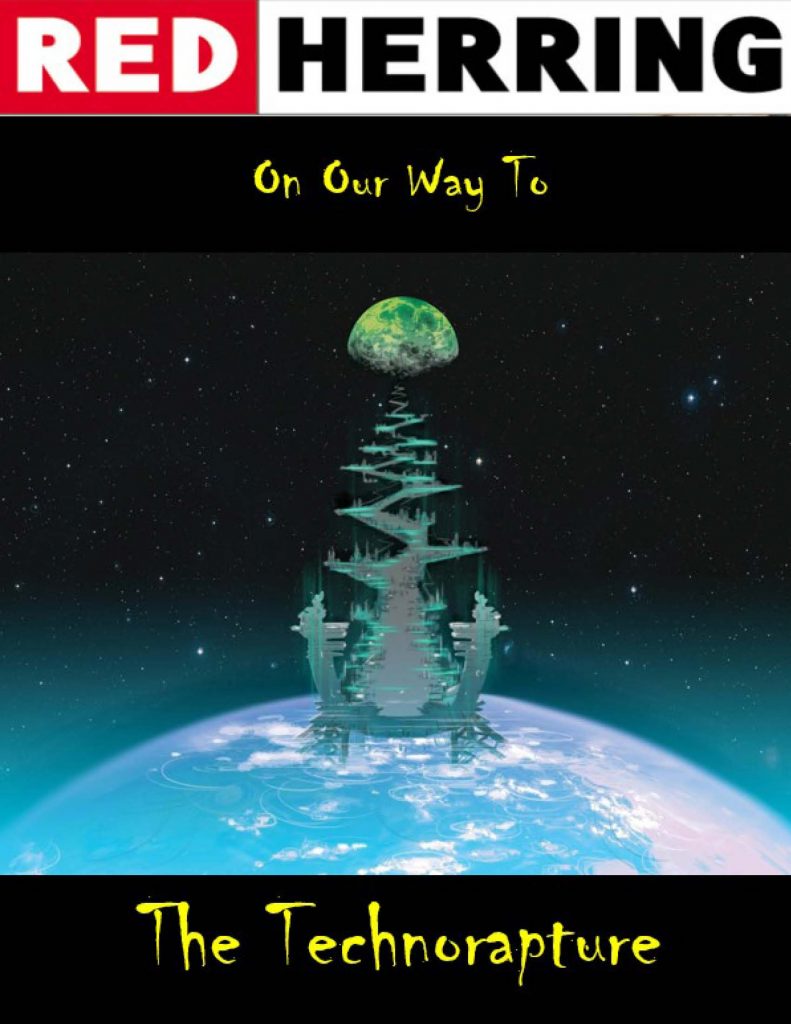
On Our Way To The Technorapture
“Beam me up, Lord” reads one bumper sticker. “In the event of the Rapture, this car will be driverless,” warns another. Apocalypse Pretty Soon tours America’s end-times fringe, while Hans Moravec’s Robot argues the real rapture will be technological: humans uploaded into machines and taxed off the planet by robot corporations, until only vast immortal “Minds” will remain to replay our entire history for their diversion.

The Truth Is All the Way Out There
At 24, Joseph Firmage sold his first company for $24 million; a few years later he ran a $2.1 billion networking giant. Then a robed alien reportedly hovered above his bed, and he resigned to spread word of the extraterrestrials who’ve secretly guided human history. The Truth is his 600-page gospel — Roswell, epigenetic religion, and the argument that he has “more credibility to lose than most UFO cultists.”
The Field’s Founders Tell Their Stories
At 12, Walter Pitts hid from street toughs in a Detroit library and emerged three days later having taught himself Bertrand Russell’s Principia Mathematica. Talking Nets gathers the oral history of the pioneers who followed him into neural networks, among them a young Geoff Hinton, whose stubborn faith in backpropagation helped lay the groundwork for today’s LLMs after two decades in which the field was starved of funding.
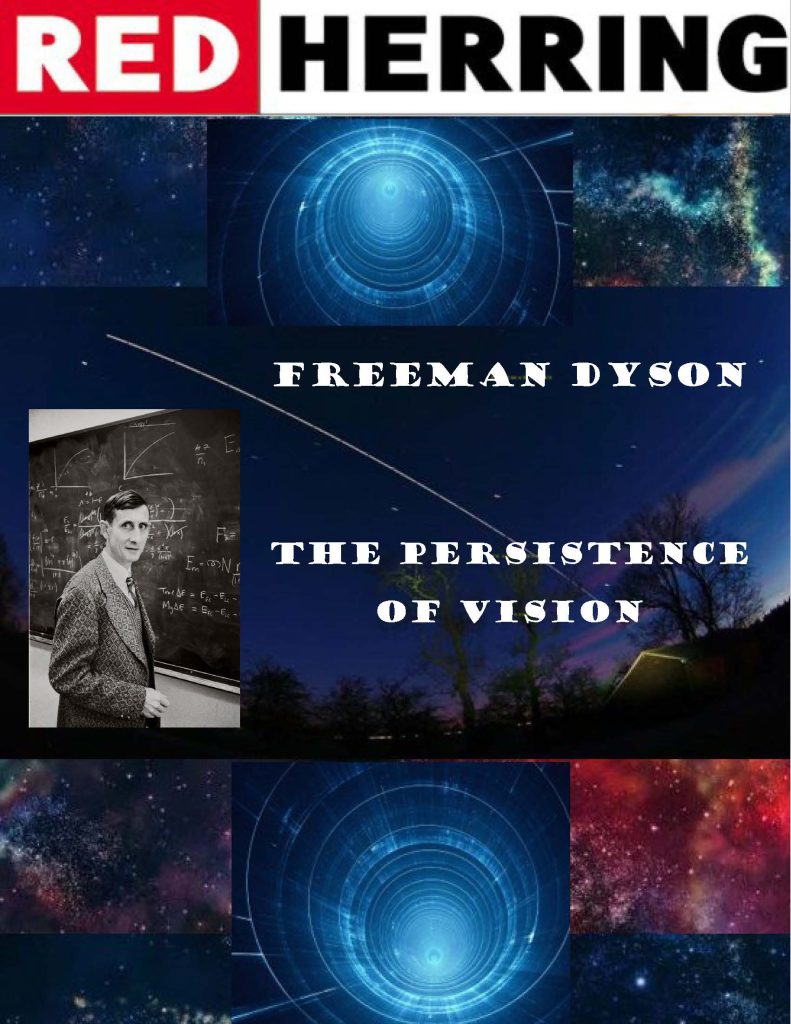
The Persistence of Vision: Freeman Dyson
A manned spaceship powered by nuclear bombs, colonized comets, trees genetically reprogrammed to grow a hundred miles tall — Freeman Dyson’s visions make Silicon Valley’s virtual malls look small. In Imagined Worlds, the scientist who reconciled quantum mechanics’ mathematics turns to civilizations engineering the universe itself, insisting: “For any speculation which does not at first glance look crazy, there is no hope.”

The Supermen –Seymour Cray’s supercomputers
At a converted glider factory in St. Paul, a nondescript WWII veteran named Seymour Cray began tinkering and ended up building 50 of the Western world’s 70 supercomputers by 1983. The Supermen traces his machines’ escalating speed, from a 1951 computer strung together with fishing line to the Cray-2, a metal tank of processors cooled by boiling fluorocarbon — a Cold War achievement Cray himself later gave away for nothing.

Norbert Weiner: Father of Cybernetics
Short, stout, myopic, and so socially maladroit he could pick his nose mid-lecture — but by 14, Norbert Wiener had already graduated college. He invented the science of cybernetics, taught WWII anti-aircraft guns to predict a plane’s flight path, and warned early on that automation carried real social costs. Decades on, his mid-century worries about intelligent machines now look less eccentric than prescient.
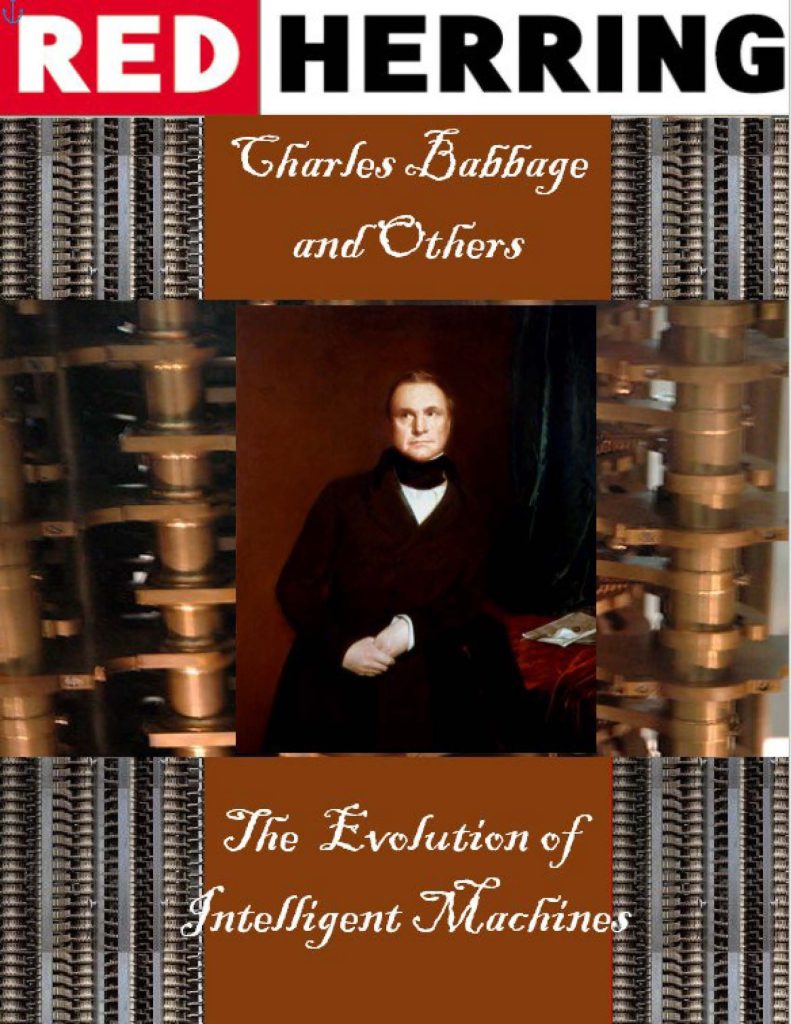
The Evolution of Intelligent Machines
Charles Babbage spent 37 of his 80 years chasing a machine of gears and cogwheels he never finished — the first design for a general-purpose computer. Nearly two centuries later, self-taught programmer Steve Grand builds artificial life instead of steam-driven logic, arguing in Creation that our cells, our minds, even the universe itself are nothing but patterns that persist while everything beneath them changes.
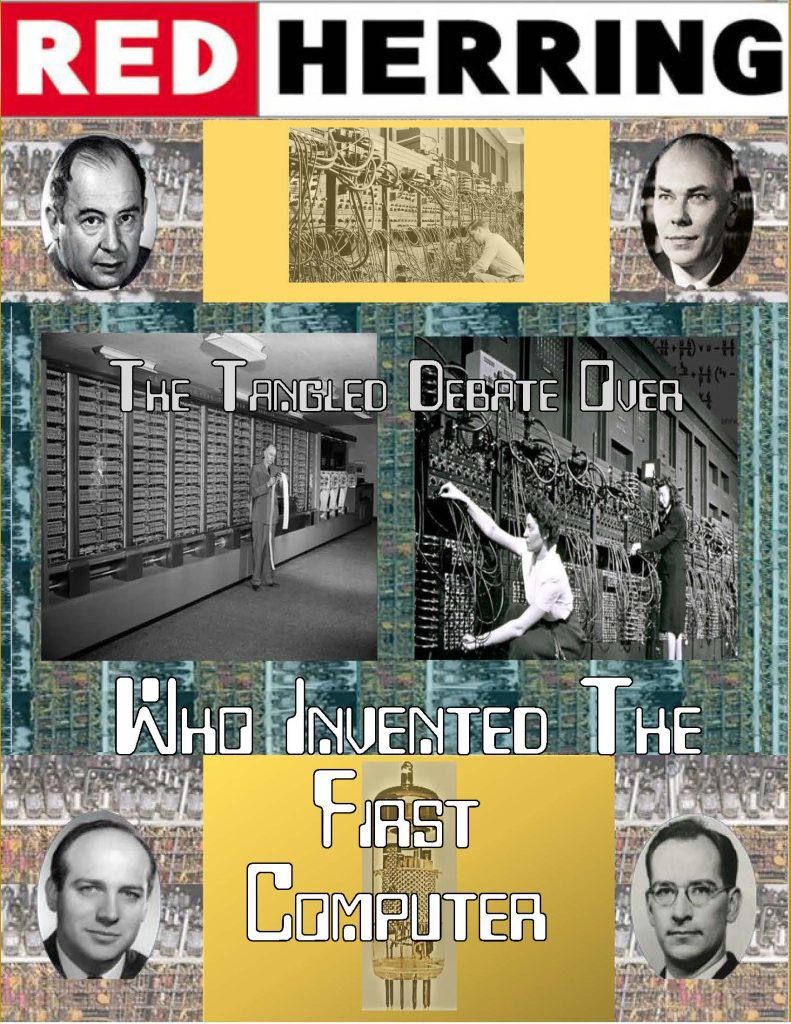
John Von Neumann or Mauchly & Eckert?
ENIAC had 1.8 billion chances of failing each second, and still beat Howard Aiken’s Mark I a thousandfold. Yet its creators, Mauchly and Eckert, hadn’t even heard of Babbage, let alone Alan Turing. John von Neumann knew Turing had proved that a machine that could read and write symbols on an infinite tape could simulate any other machine whatsoever. He wanted to build a Turing machine that ran at electronic speeds and walked off with the credit.

Parallel Computing Pioneer
Danny Hillis has built disk arrays, forgery-proof currency, a clock designed to run 10,000 years, a working computer made entirely of Tinkertoys, and pioneered massively parallel computing at Thinking Machines. Now, at his secretive new venture Applied Minds, he argues intelligent machines won’t be engineered at all — we’ll evolve them, understanding how minds work only after we’ve built ones that do.
Digital Utilities & Cloud Computing
“Our fundamental response is: hogwash. We look out there like kids in a candy store,” scoffed Microsoft’s Steve Ballmer at Nicholas Carr, the analyst who declared IT a mere commodity in “IT Doesn’t Matter.” The Big Switch doubles down, predicting computing will become a utility piped in like electricity — while warning that the shift could gut IT jobs and fracture civil society along the way.
Seriously ~
Schrödinger’s Money?
Einstein dismissed it as “spooky action at a distance.” Now Caltech physicists have manipulated entanglement itself, halting photons within clouds of cesium atoms so as to build the first working nodes of a quantum network. Between teleported photon states and superconducting loops, the pieces for a quantum internet — and uncounterfeitable money — may be starting to fall into place.
A Quantum Leap for Photonic Computing
A single square centimeter of light hitting your retina carries more than a million points of data, all arriving together — your optic nerve’s data rate rivals a hard drive’s. Mind at Light Speed argues silicon can’t keep pace: as transistors shrink to single electrons by 2020, David Nolte foresees computers made from photons instead, which will rebuild themselves at light speed, nanosecond by nanosecond.

How Japan’s Entrepreneurs Created The Consumer Electronics Era
“Software is a gas — it expands to fill its container,” warns Microsoft’s CTO, describing the arms race between bloated code and ever-hungrier chips. The Invisible Computer argues the fix is networked, smart appliances. We Were Burning is the story of the Japanese engineers who, two decades ahead of Silicon Valley, created the consumer electronics business.
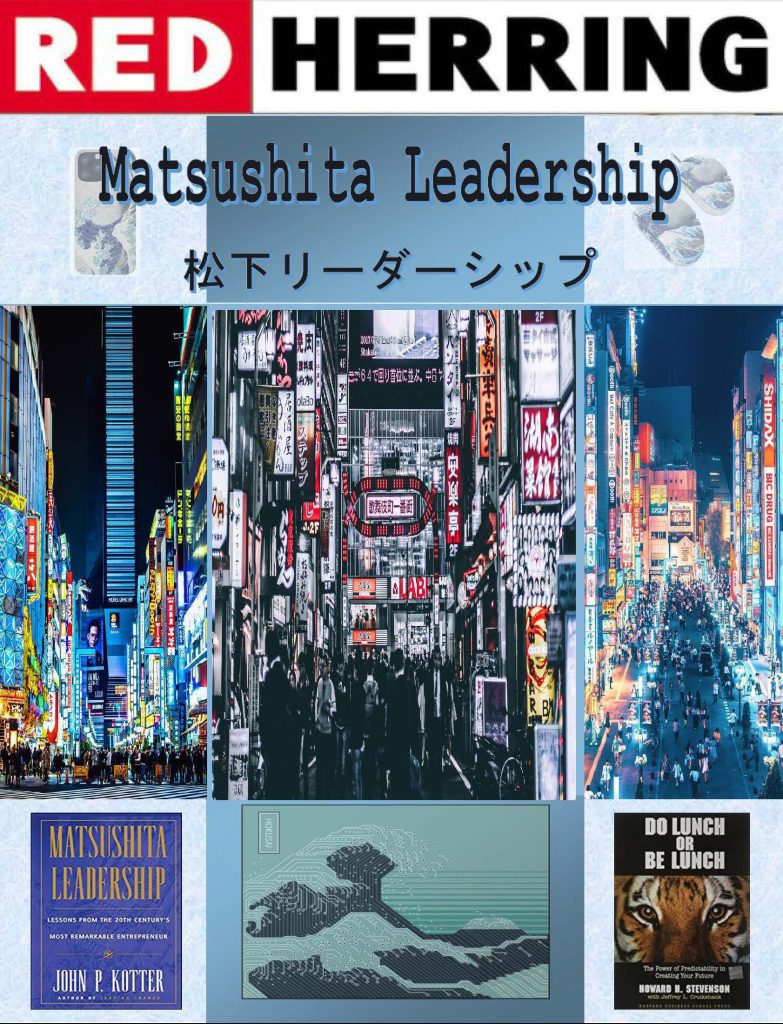
Games Companies Play: Matsushita Leadership & Do Lunch or Be Lunch
At 17, unable to write fast enough to keep up in class, Konosuke Matsushita dropped out — orphaned, penniless, and destined to build a $65 billion empire. Matsushita Leadership traces his rise; Do Lunch or Be Lunch supplies the theory: since most deals repeat, keeping your word beats grabbing the money and running — game theory’s case for why good guys can finish first.

In The Red: China’s Brand of Consumer Socialism Grows Even Stranger
“Buy a karaoke cassette of ‘Sing a Song for the Party’ and you’ll get a free picture of Chairman Mao” — a Beijing music store’s pitch captures the surreal hybrid that is modern China. In a culture where vacuum-cleaner ads quote the Great Helmsman and insecticide slogans borrow his war cries, slackers need to be supremely determined.
In China, Communist Rule & Markets Will Be Compatible
Surgical vans wait outside China’s labor camps as prisoners are executed, then rush away with harvested organs — one of the “creepier benefits” as the laogai‘s commandants privatize profit-sharing. Harry Wu, twice imprisoned for reporting on it, maintains capitalism and democracy aren’t the same thing: newfound Chinese markets, he argues, are producing a pitiless hybrid of totalitarianism and profit.

Why Not Everyone Will Buy America’s Free Market Ideology
“Two hundred million children are sleeping in the streets tonight. None are Cuban” — the propaganda line that captures globalization’s uneasy conscience. The Lexus and the Olive Tree casts America as benign free-market hegemon; Juárez answers with photos from the border’s maquiladoras, where workers vanish into the desert and free trade’s triumph looks like a laboratory for a horror-show future.
Manuel Castells – Information, Society, and Culture
Two businessmen shake hands in an airport lounge; a mile away, armed guards separate starving people from food. Manuel Castells spent twelve years and three volumes mapping the global “network society,” where informational capitalism excludes whole populations into what he calls the “Black Holes” of the new economy — documenting a new world order that both transcends nations and abandons them.
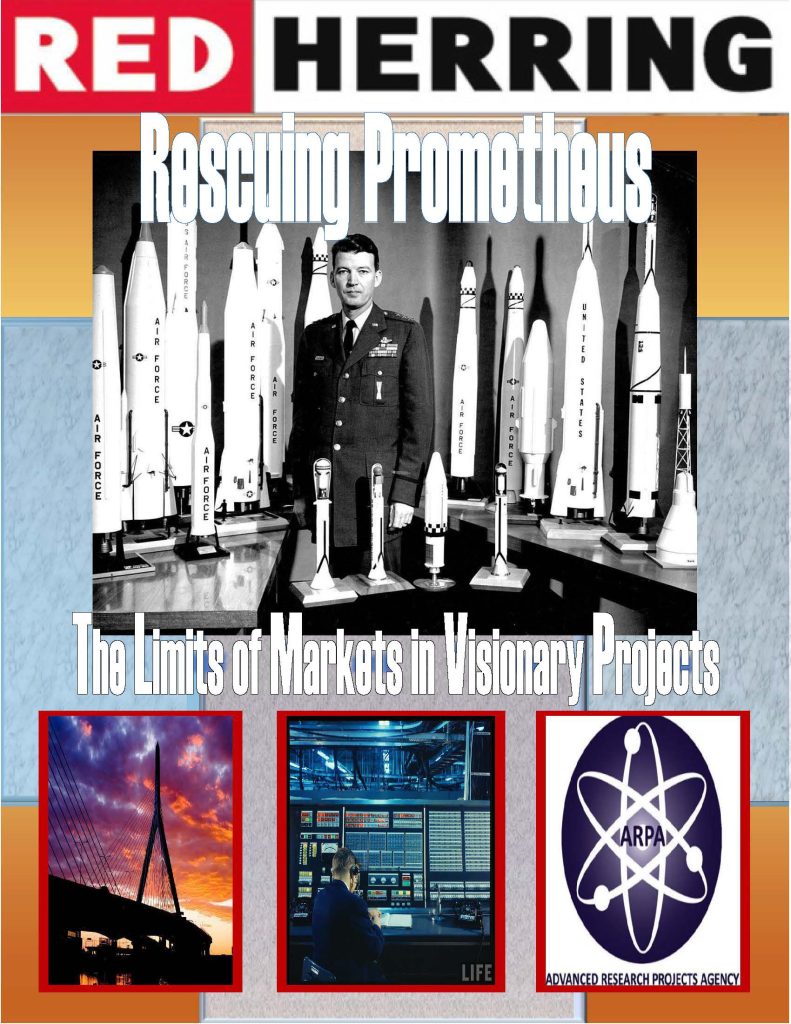
Markets’ Limits in Visionary Projects
Cathedrals, pyramids, Moon landings, the Internet: humans require large, visionary projects. From Apollo to SAGE’s continent-spanning radar to the Atlas missile program, Cold War megaprojects created Silicon Valley. Free market advocates must face the fact that the Internet’s bottom-up growth was enabled by ARPANET’s decentralized design, bequeathed to us by government planners and funded by federal monies.

Selling the Telling of Our Lives
“By 2025, Greenland’s main export will be legends and fairy tales” — so predicts The Dream Society, imagining CEOs as storytellers-in-chief peddling myth over strategy. The Entertainment Economy tracks the same shift already underway: Los Angeles’s defense assembly lines replaced by soundstages, consumers everywhere paying premium not for the product, but for the story wrapped around it.

It’s Suburbia, Jim — But Not As We Know It!
“Is this building really necessary?” — the question E-topia insists we’ll soon ask of everything, as wall-size smart Sheetrock replaces whole structures with electronic substitutes. Celebration, U.S.A. looks inside Disney’s real-world utopian town, where front porches went unused, construction was shoddy, and the residents who lived there planned to leave, while dreaming instead of a town merely “a lot like Celebration.”

How Do We Rethink Privacy in the Internet Age?
In 2005 a young woman let her dog foul a South Korean subway car and refused to clean it up. Someone snapped a photo; within days she was known to millions as gae-ttong-nyue — dog poop girl — and dropped out of her university. Daniel Solove’s Future of Reputation argues that the internet has revived village-level social punishment, on a scale villages never had.

Choose Valhalla for Your Posh New Digital Age Adress
Joel Kotkin coins names for the digital economy’s winners: “nerdistans,” the high-end suburbs untouched by commuter traffic, and “Valhallas,” scenic rural retreats like Vail where the rich keep ranch estates. The losers get no such poetry — just old manufacturing cities and rural towns that experience decline and every more degraded infrastructure.
When Genius Failed: Long Term Capital Management
In a legendary hand of liar’s poker, Salomon Brothers’ chairman proposed a $1 million bet, no tears. John Meriwether shot back: “I’d rather play for real money — $10 million, no tears.” He walked away and later founded LTCM, a hedge fund staffed with physicists and two Nobel laureates that leveraged $1.3 trillion in derivatives and nearly broke the global economy.
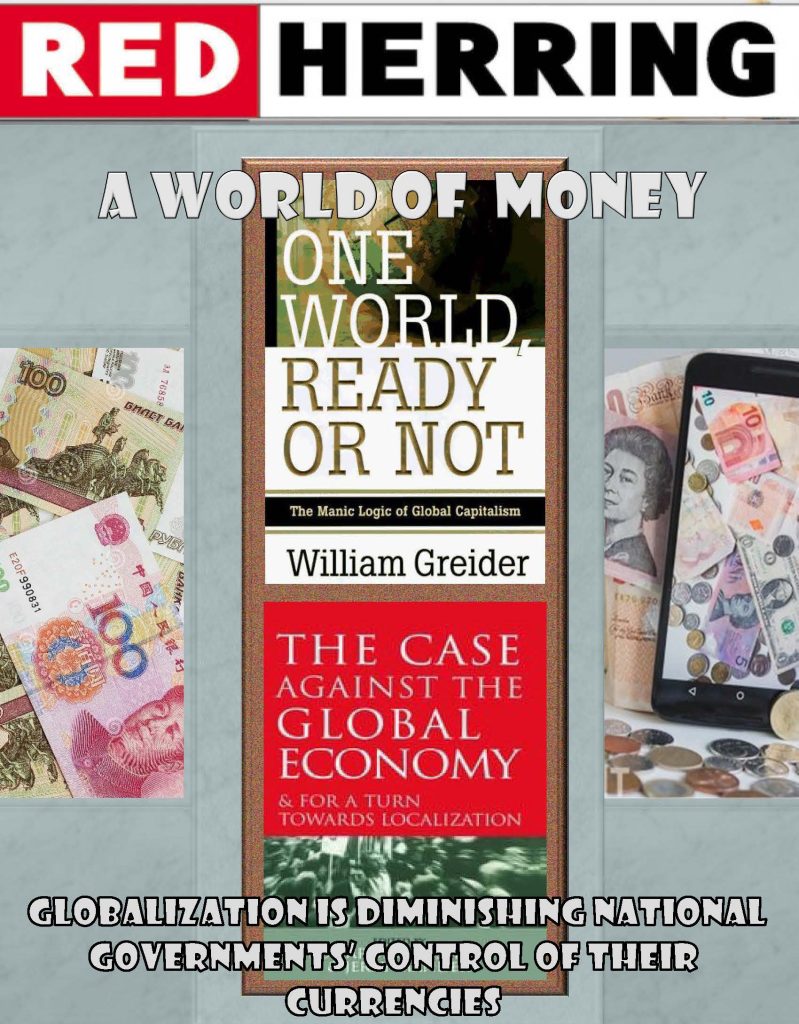
Globalization Hits Nations’ Control of Their Currencies
With the global currency market now exceeding the combined GDP of every major economy, governments get regular lessons in how little control they actually retain over money. William Greider fears where this leads; forty essayists in The Case Against the Global Economy want to stop it outright. Future currencies, one contributor speculates, may form around shared identity rather than geography

Basic Instinct:the Past, Present & Future of Money
Being the Aztec equivalent of a good Rotarian demanded paying for a human sacrifice that cost as much as 40 woven cloaks. The victim’s still-beating heart was then ripped out by an appropriately pious priest. Those corpses that the merchants didn’t sponsor had their choicest cuts sold for chocolate beans. Jack Weatherford traces the history of money from ancient times to today’s electronic currencies.
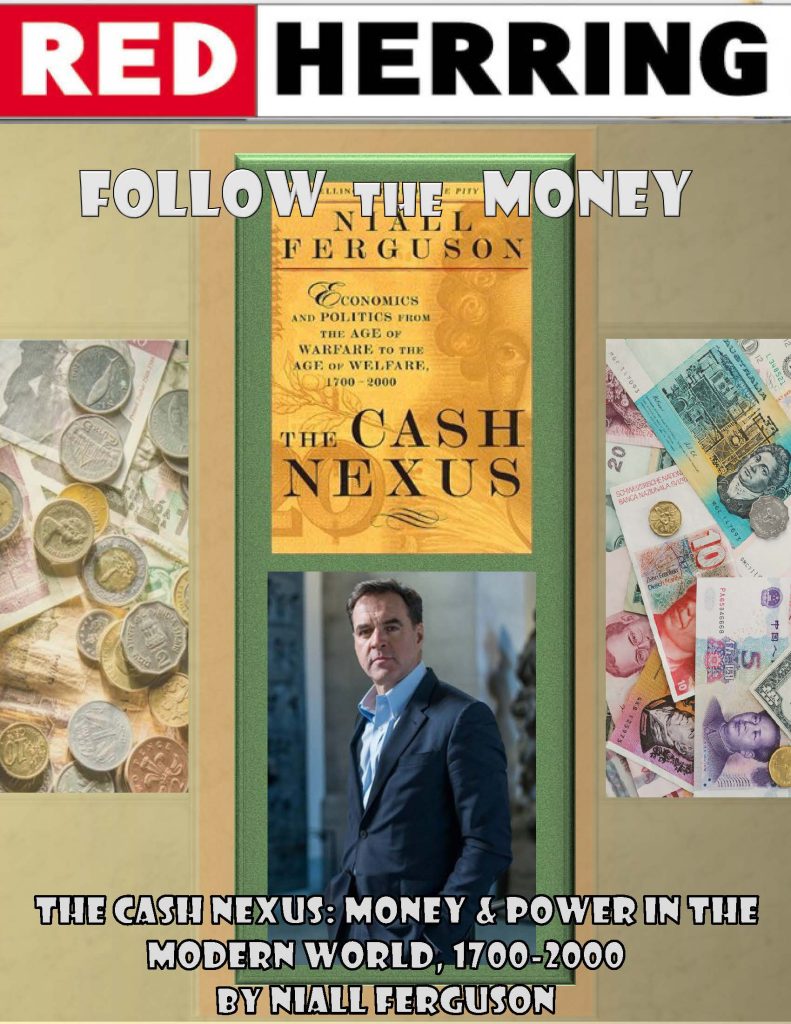
Follow the Money: the Cash Nexus – Niall Fergusson
It’s not just the economy, stupid. Niall Ferguson spends 380 pages proving the opposite of America’s favorite political cliché: there’s no free market without an effective state, economic growth doesn’t guarantee democracy, and — as Al Gore learned the hard way — voters don’t reliably reward good times. Money financed wars and empires, but power dictates to money as much as money dictates back.
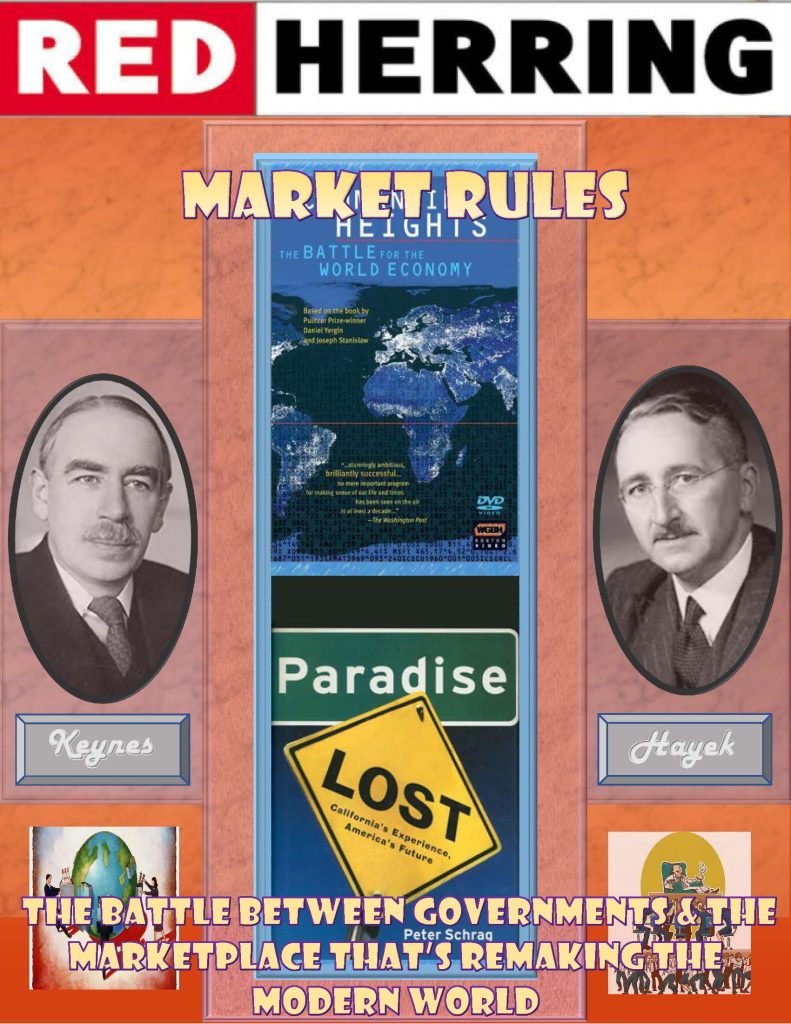
The Global Battle Between Governments & The Marketplace
When Margaret Thatcher was still just Britain’s opposition leader, she held up high economist Friedrich Hayek’s book and declared, “This is what we believe.” The Commanding Heights traces how that conviction conquered the world — while Paradise Lost shows what it cost California, where voters gutted their own taxes in 1978 so that today Californians are still living in the wreckage.
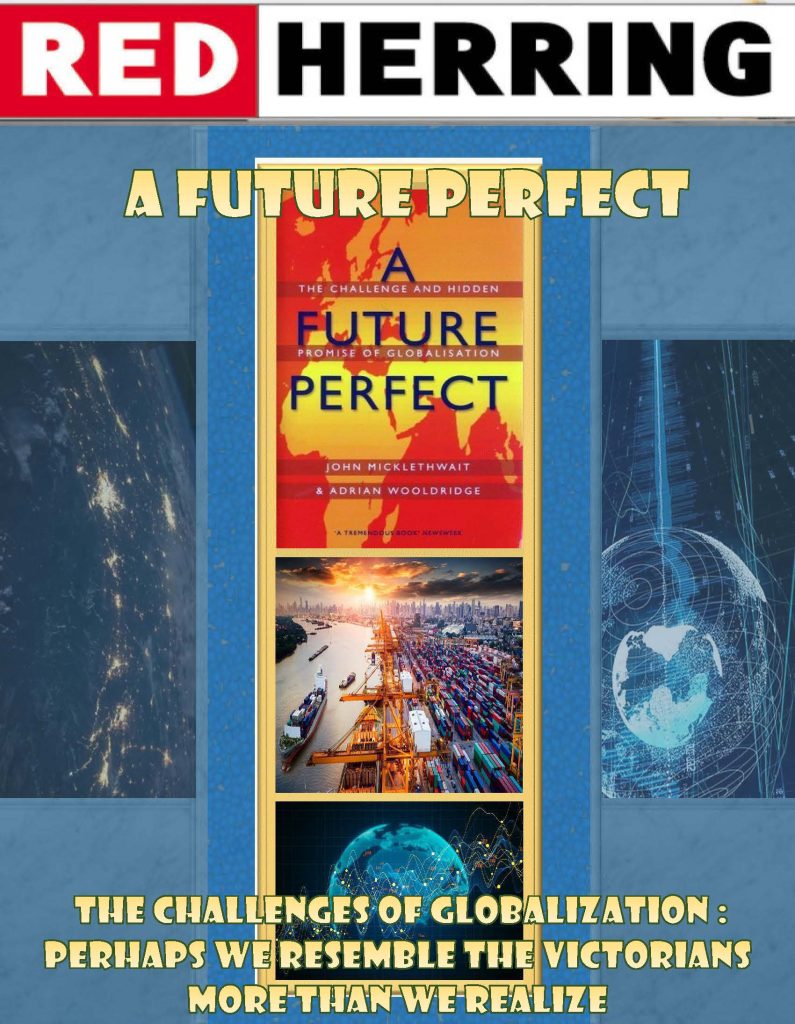
Market Rules: The Challenge & Promise of Globalization
A Future Perfect argues that we resemble the Victorians more than we admit, then dares ask globalization’s rudest question: isn’t it the developing world’s turn? Even Keynes abandoned free trade for protectionism once, before Bretton Woods brought him back. If poorer nations can do our jobs more efficiently today, our real objection was never economic, only that we don’t want to lose.

Are The Management Gurus Saying Anything Worthwhile?
A Korean businessman changes his first name to Drucker. A billboard in downtown Beirut, amid pockmarked buildings and Hezbollah’s yellow banners, summons the faithful to a Total Quality Management seminar. In an Asian newspaper, a full-page advertisment announces “the world’s most competitive man”—management guru Michael Porter is coming to town. Management theory is big business.
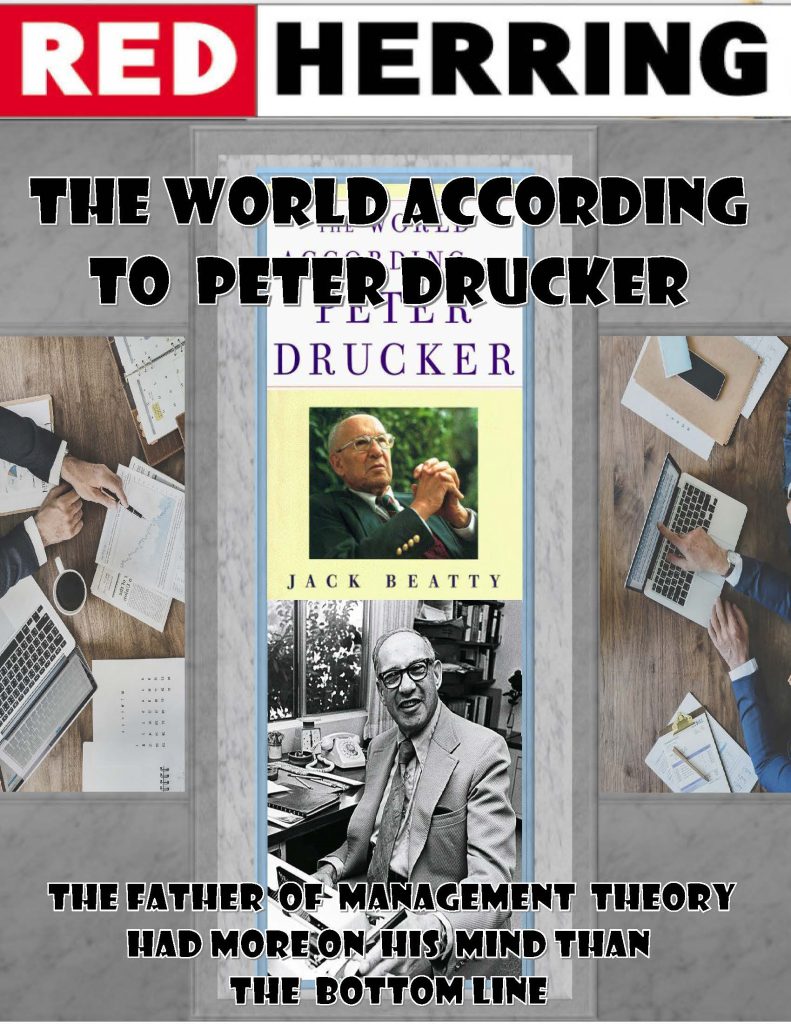
Peter Drucker Had More On His Mind Than The Bottom Line
Peter Drucker fled Nazi Germany after they burned his pamphlet, got banned from Westinghouse’s offices as “some kind of radical,” and was fired from Sarah Lawrence for refusing to sign a Communist condemnation. He went on to invent management theory outright. As one editor puts it: reading Drucker is depressing, because he’s as good as this stuff gets.

The Essential Peter Drucker: A Greatest Hits Collection
Peter Drucker, aged 91, casually claimed to me that Franz Kafka was a leading expert on workers’ compensation in Vienna, then that he himself was the sole survivor of an Eisenhower health-care commission no one else now recalls. He also personally knew Freud, Keynes, Buckminster Fuller, and McLuhan. Whether or nor every fact holds up, the perceptions do.

Michael Wolf Torches Everyone He Met in the Net’s Early Days
Asked whether he’s “a dishonest, scheming little shit,” Michael Wolff doesn’t hesitate: “Oh yes, that’s exactly what I am.” His memoir of the dot-com gold rush skewers nearly everyone he met — a financier described as “a wire-thin, almost feminized JFK Jr. look-alike,” Wired’s founder as a “lost soul” chasing his own myth. Nobody has sued him yet, at least.
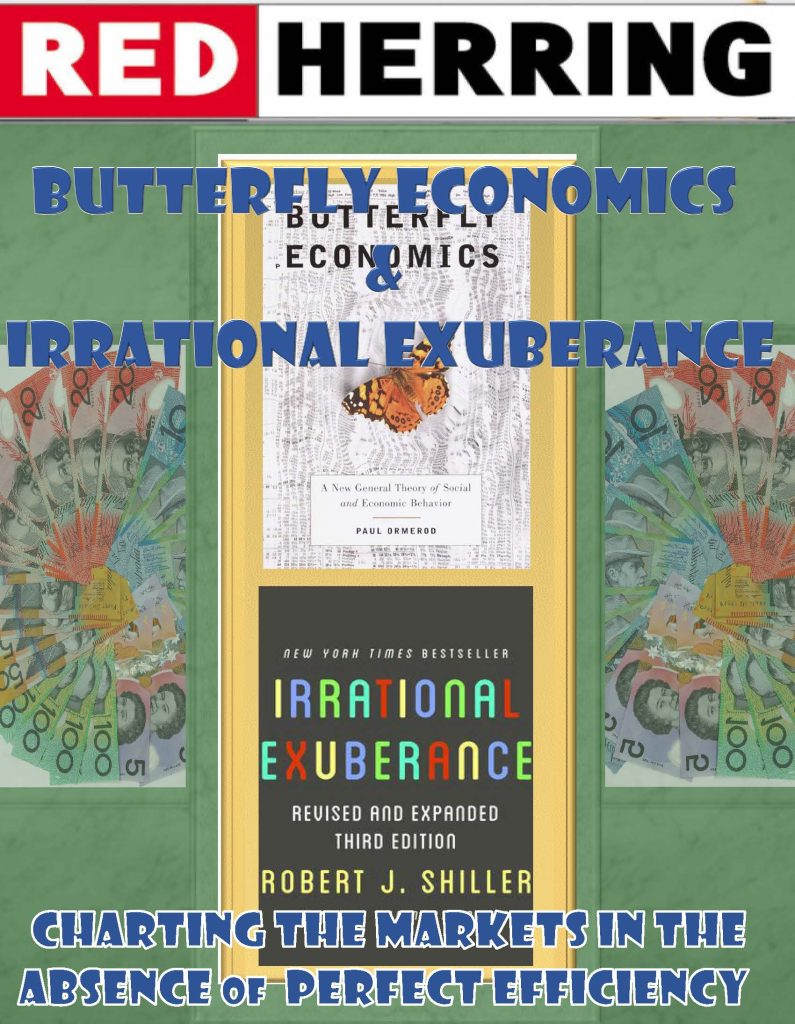
The Myth of Efficient Markets
Paul Krugman’s teenage fantasy was to become a psychohistorian, predicting society’s future like Asimov’s Hari Seldon did. Efficient-markets theory assumes something just as unrealistic: that though a third of Americans believe the government talks to aliens, rational actors run the economy. After Robert Shiller talked to the Fed, Greenspan accepted the idea of market irrationality.
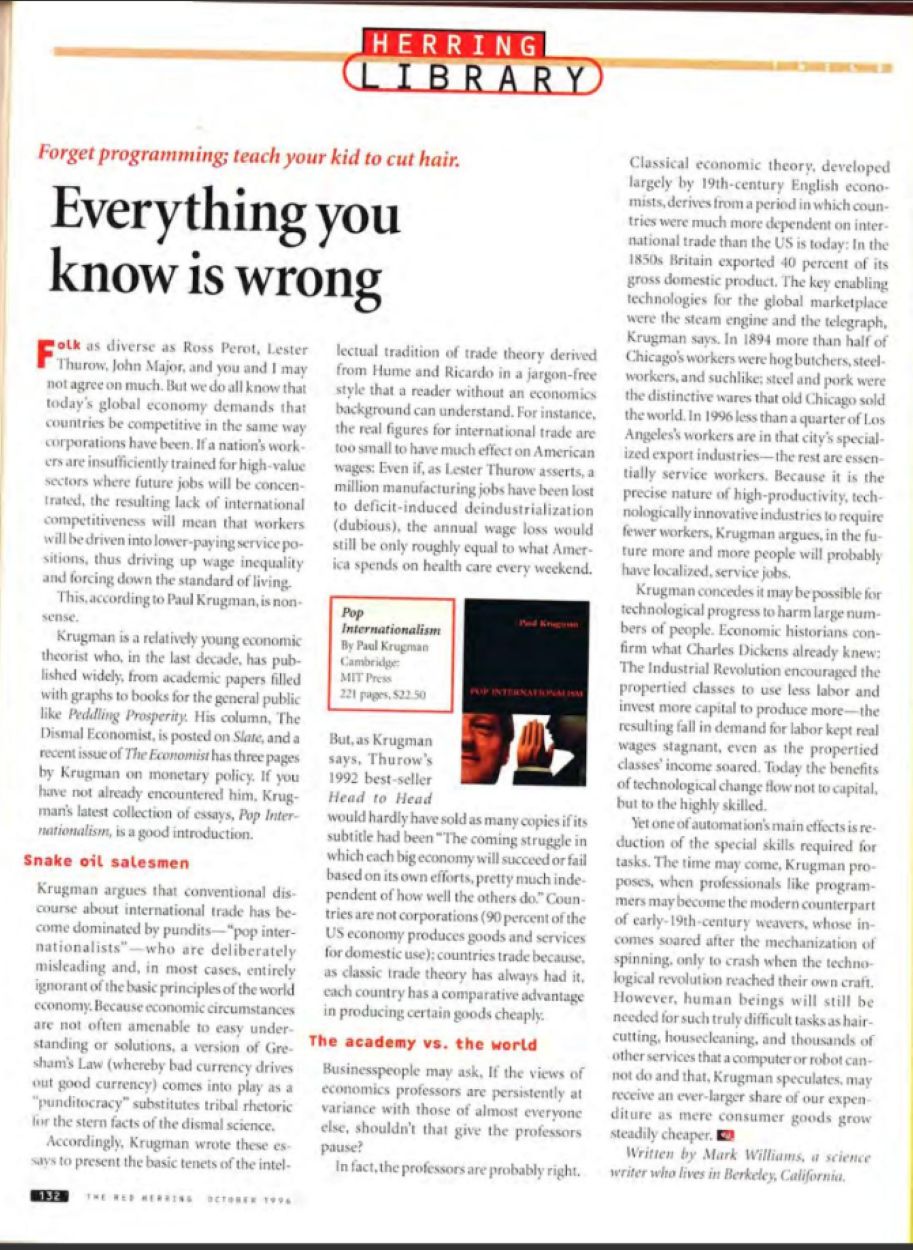
Pop Internationalism ~ Paul Krugman
Forget programming — teach your kid to cut hair. Krugman’s contrarian advice: today’s safest professionals, from economists to coders, may be this century’s version of 19th-century hand-weavers, whose wages soared right up till the arrival of the machines. What will actually survive automation, he argues, will be the jobs a robot still can’t do — haircuts, housecleaning — because they require human hands.
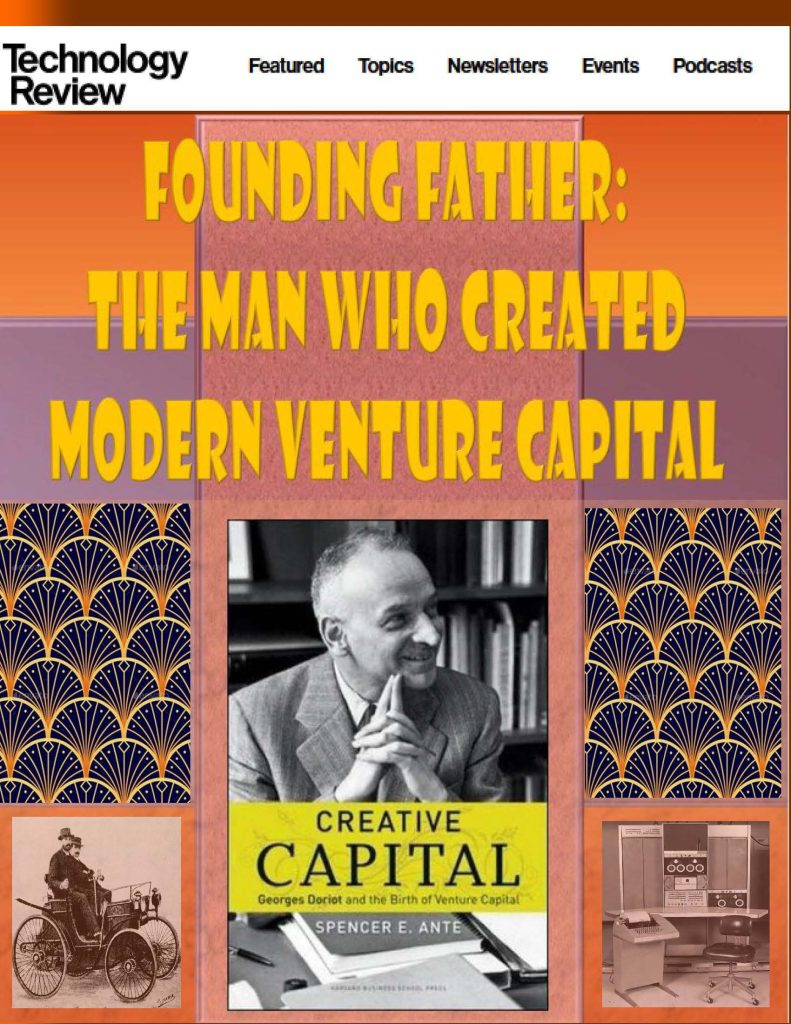
Venture Capital’s Founding Father
A colleague once called Georges Doriot “the most schizophrenic Frenchman I’ve ever met” — devoted to wine and French sophistication, yet driven by a pro-entrepreneurial zeal most Americans couldn’t match. In 1957 he staked $70,000 on a fledgling company called Digital Equipment Corporation. It returned over $400 million. He’d just invented modern venture capital.
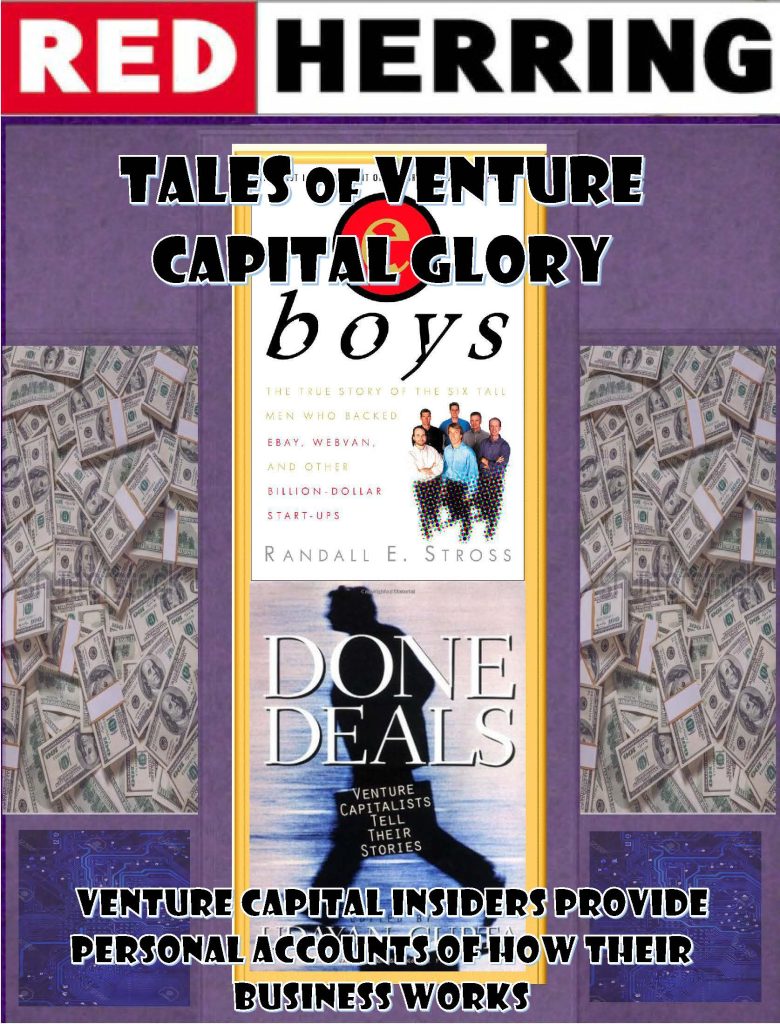
Tales of Venture Capital Glory
Benchmark’s venture partners average six-foot-five and $100 million in new net worth a year, but Randall Stross’s eBoys can’t decide if it’s profiling geniuses or frat boys — its opening pages read like a locker room. Better is Done Deals, an oral history where VCs like Bob Kagle actually sound wise, flatly declaring biotech off-limits with a slide showing the medical caduceus crossed out.
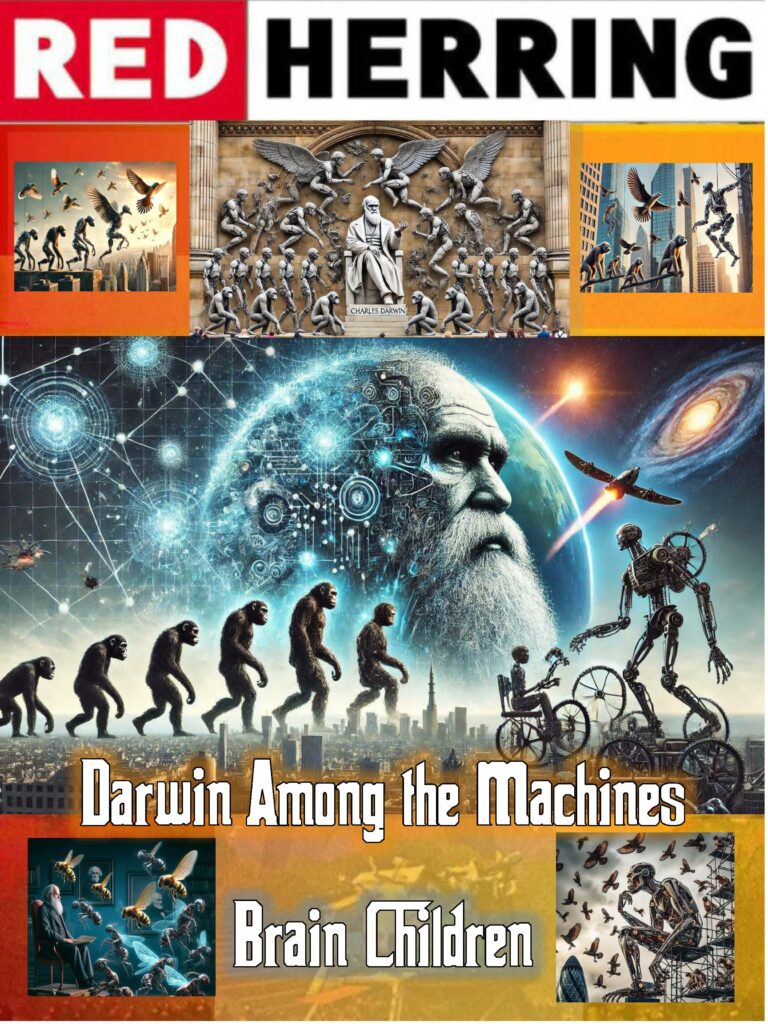
Darwin Among the Machines
In the beginning, Pandemonium begat the IBM 7094 demon, Eliza begat Parry the paranoid program, gamebots begat spambots, and their name was legion — Andrew Leonard’s biblical genealogy of the internet’s bots. George Dyson goes deeper, resurrecting John von Neumann, who told Oppenheimer no weapon could be too large, and designed the logic our machines still run on.

A Surrealist Manifesto
How many surrealists does it take to screw in a lightbulb? Three — and Robert Reid’s survey of the Web’s founding entrepreneurs opens with a 32-page introduction nearly that absurd, so overwrought it reads like self-parody. Strip away the hype, however, and the profiles — Marc Andreessen, Halsey Minor, Mark Pesce among them — hold up as sharp, useful journalism.
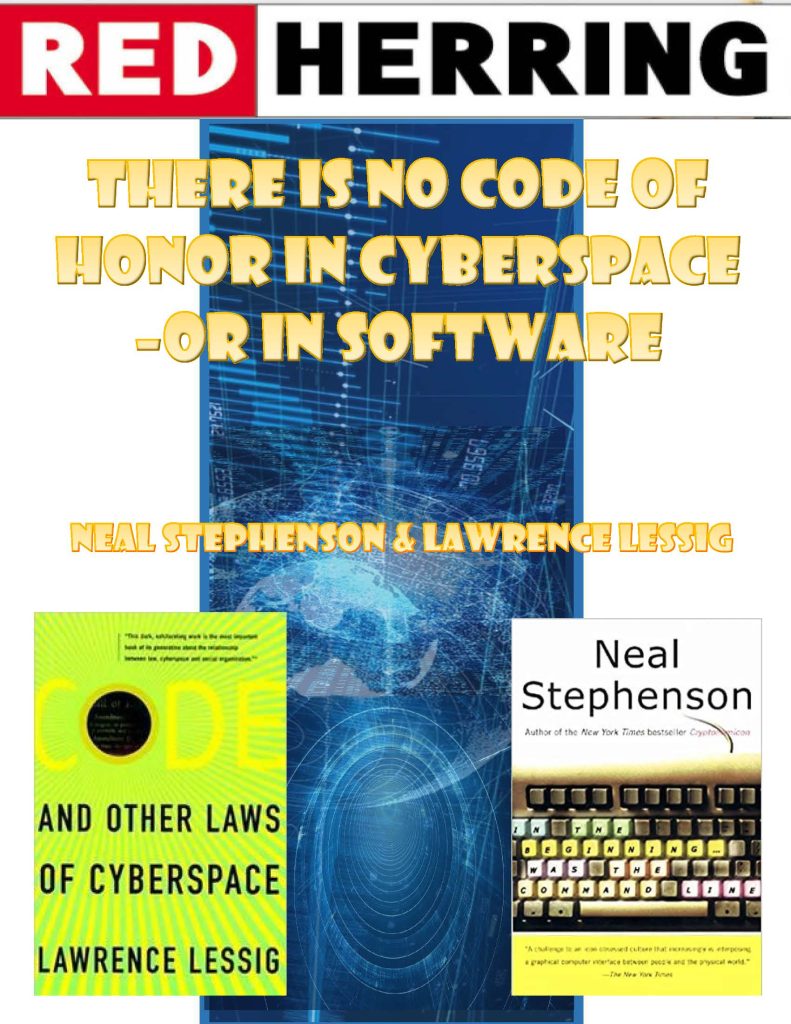
Neal Stephenson And Lawrence Lessig
Cyberspace was never destined to be free — it’s built from code, which does whatever it’s designed to do. Government and commerce, Lawrence Lessig warns, are building a surveillance state. Neal Stephenson, meanwhile, sees operating systems as car dealerships: Windows sells station wagons, Apple sedans, and Linux just hands out tanks for free.
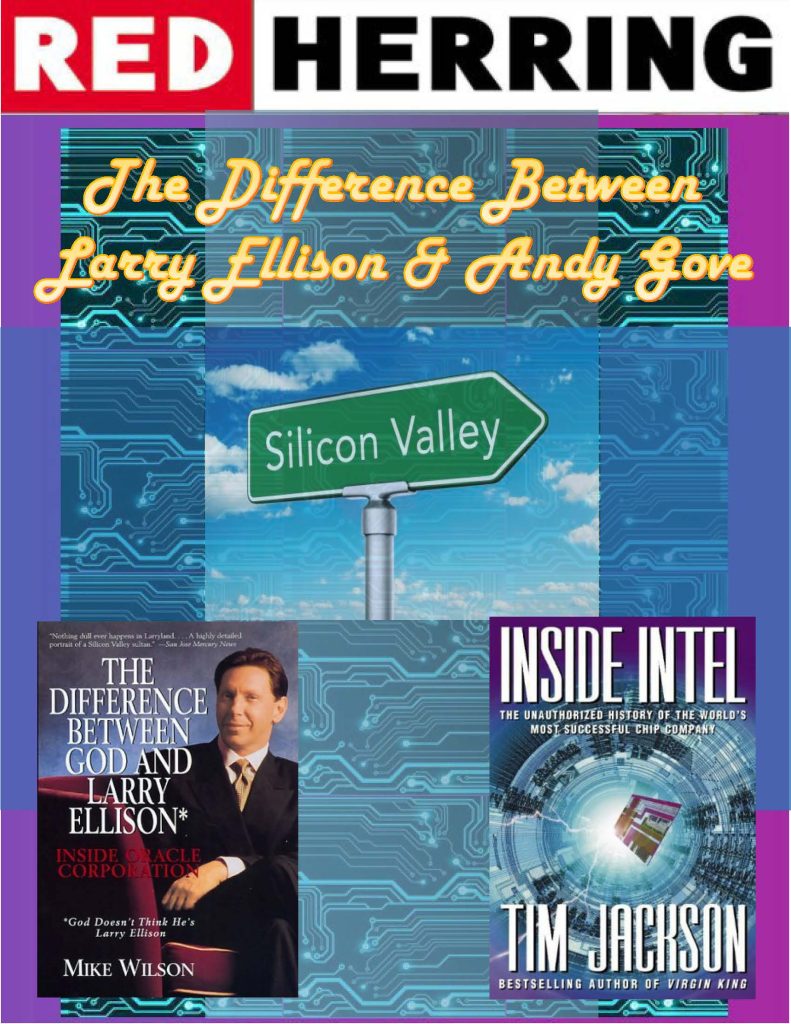
The Difference Between Ellison And Gove
Two CEOs, two very different origin stories. Larry Ellison talked his way from being an unwanted Brooklyn teenager into Silicon Valley’s fifth-richest man. Andy Grove escaped the Nazis, scavenged after the Soviets invaded, and runs Intel by demanding two lawsuits a quarter; one ex-employee lives armed, terrified that Intel may try to kill him.

Runaway Universe And Cosmic Constant
Why is the night sky dark? By pure logic it shouldn’t be — an infinite, static universe should blaze white with the light of an infinite number of stars. That it doesn’t is proof the cosmos is expanding, finite, and young. In 1998 astronomers found something stranger still: the expansion is accelerating, reviving the very idea Einstein once called his “greatest blunder.”

India in Space
As China grabs the headlines with its taikonauts, India is quietly designing something stranger: Avatar, a reusable scramjet spaceplane that takes off from a runway, skims its own oxygen from the air mid-flight, and could reach orbit for $67 a kilogram — against $4,300 for a Russian rocket launch. Yet some people suspect, alternatively, that it’s really just a missile in disguise.

Power Play
Cell phones allowed India and China to leapfrog landlines straight into the information age. K.R. Sridhar wants electricity to do the same — junking Edison’s century-old grid for minivan-sized fuel cells generating power on-site. And he’s also building an oxygen generator for Mars, eight inches tall, to enable humans to live off the red planet’s own atmosphere.

Chasing Nano
Heat, it turns out, behaves like light — a wave-particle duality Einstein anticipated but nobody could exploit until now. Arunava Majumdar explains how stacking materials 20 molecules thick could yield super-insulators, super-conductors, and batteries the size of a lighter cartridge which will be able to outlast today’s by a factor of ten.
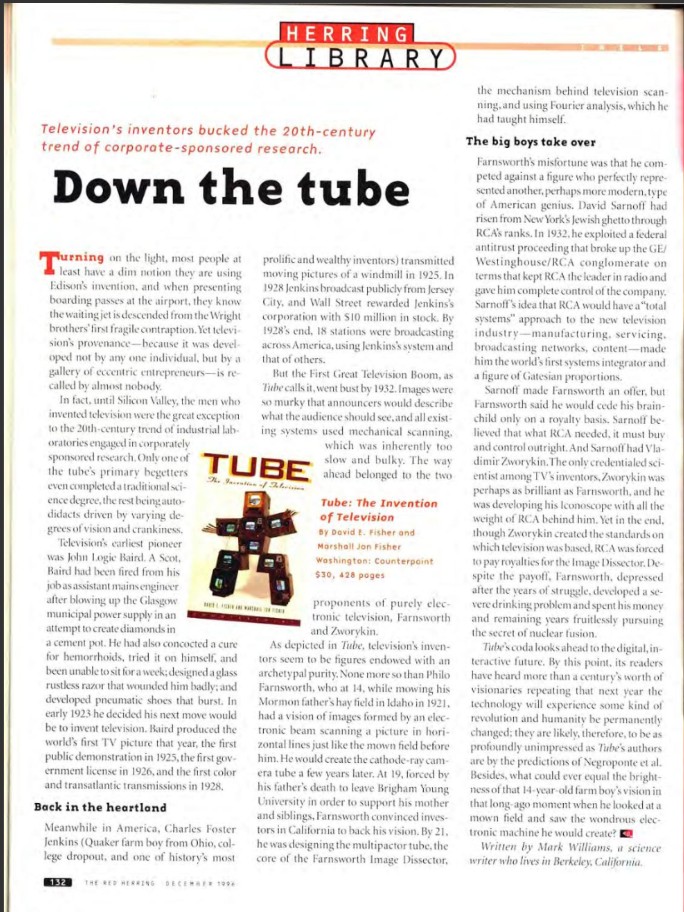
The Invention Of the Boob Tube
At fourteen, plowing an Idaho field, Philo Farnsworth looks at the furrows and sees rows of electrons scanning a picture — the idea that becomes television. He’s self-taught, obsessive, and about to be crushed. RCA’s David Sarnoff wants the technology without the man, and the eccentric loners who actually invented TV lose everything but the credit.

Scientific Racism & Sports
The celebration of black athletic prowess in America is derived from the same pseudoscience that white Americans once used to brand black people as mentally inferior. Simultaneously, today’s “cult of black athleticism” quietly fuels anti-intellectualism among black youth. So at least runs the argument of one white college professor. Could he be right?
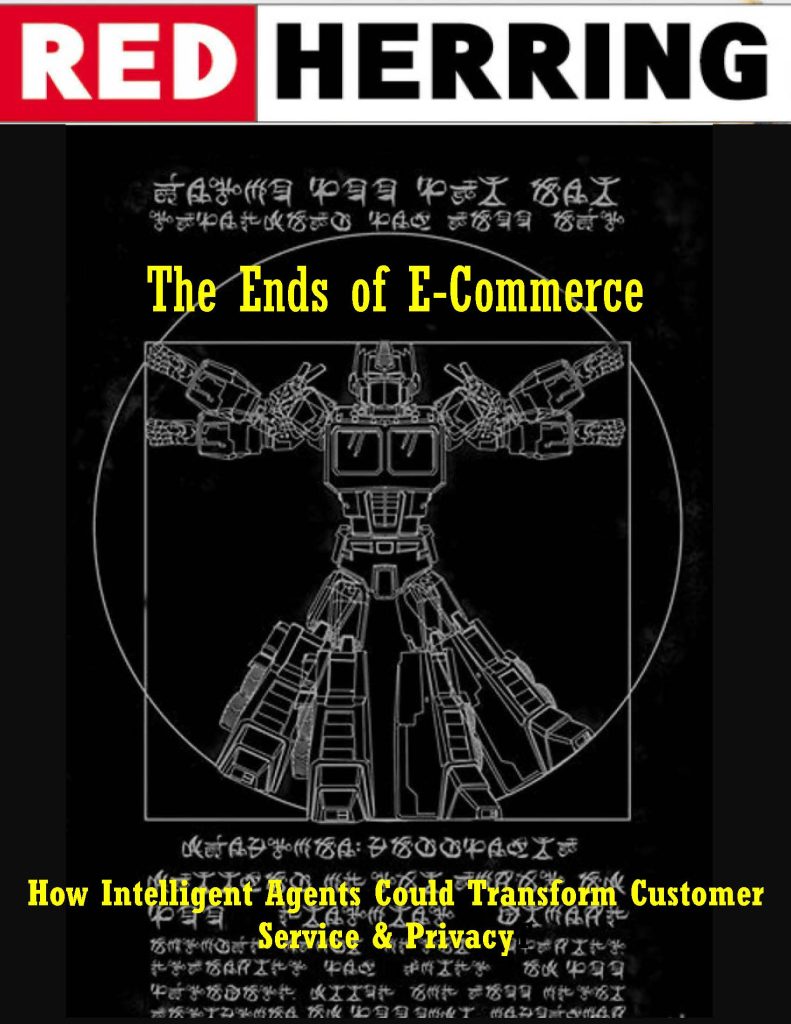
E-Commerce & AI Agents
A future of AI agents reshaping e-commerce, negotiating on our behalf, screening telemarketers, and personalizing products in real time was already visible in 1998. So was the cost — personal data becoming currency, privacy turning into a luxury good, biometric surveillance tracking your every move, and identity itself up for sale.
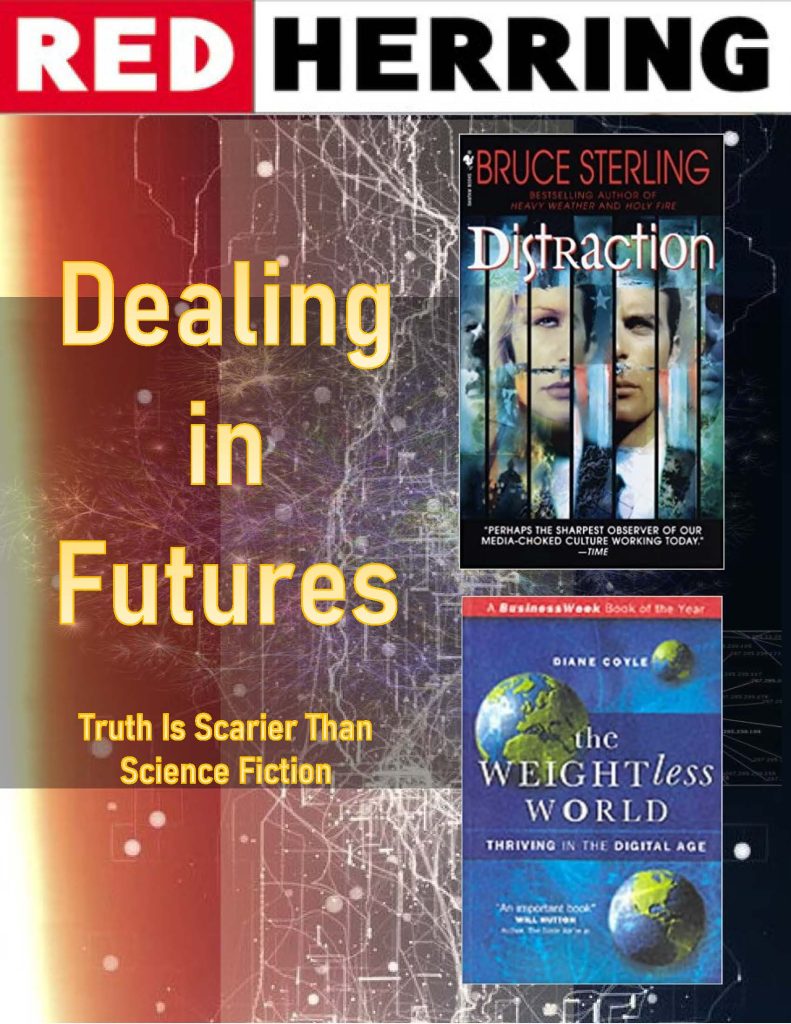
The Strange Far Future World of 2030-2045
Two rival futures: a post-Net world of collapsed nation-states, stripped of old power and certainty, versus a weightless economy of shrinking factories and swelling debt. Meanwhile, biotech promises increasingly repairable bodies — raising harder questions: who gains the extra decades of life this makes possible? Indeed, who can afford them?
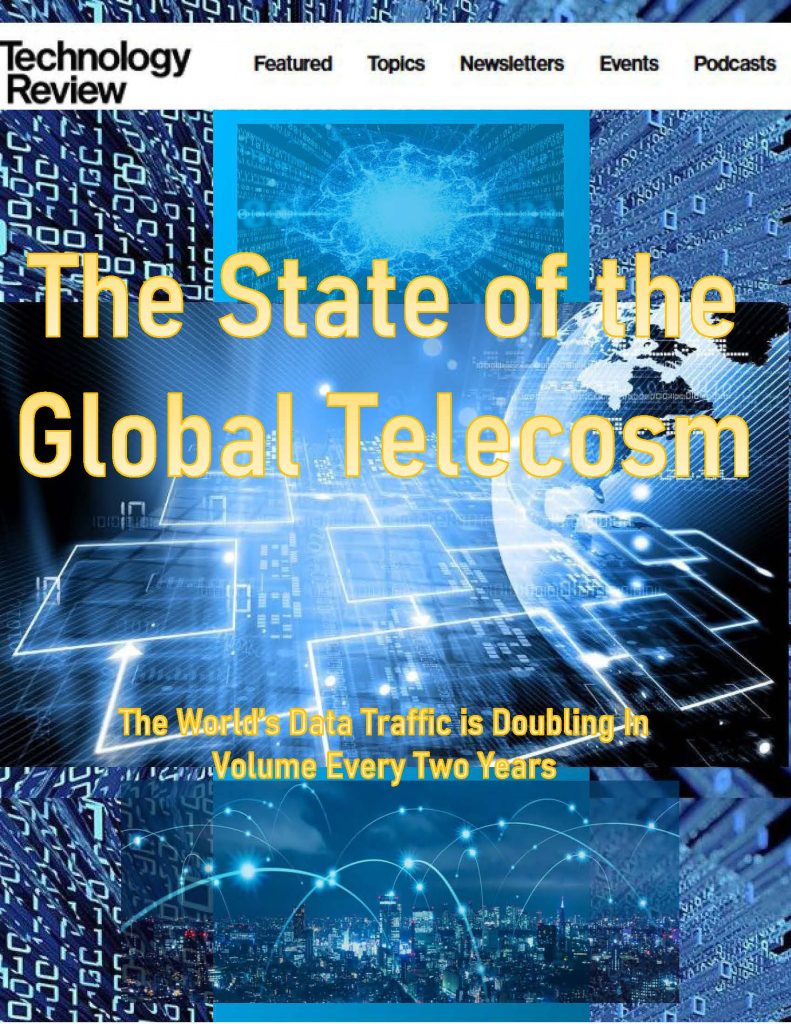
The Expanding Universe of the Early Internet
The Internet in 2008: a runaway tidal surge of data, with traffic doubling every two years, video poised to dominate everything, close to a terameter of fiber-optic cable forming the planet’s digital nervous system, and engineers racing toward 40‑, 100‑, and terabit‑speed networks as the fiber laid down during the dotcom boom was finally lit up.
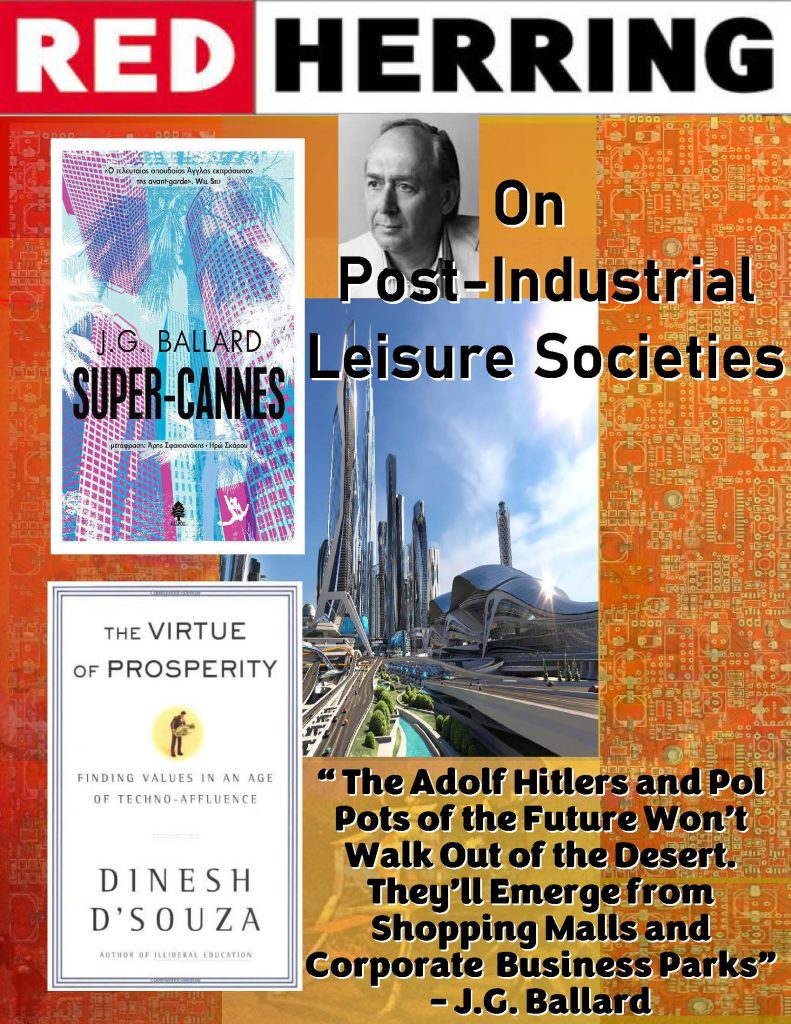
Post-Industrial Leisure Societies
“The Adolph Hitlers and Pol Pots of the future won’t walk out of the desert. They’ll emerge from shopping malls and corporate parks.” How could leisure societies be energized and consumer capitalism be maintained in the future? One great resource that might be tapped for that purpose, J.G. Ballard suggests, might be our transgressive and criminal behaviors.